






What's Happening?
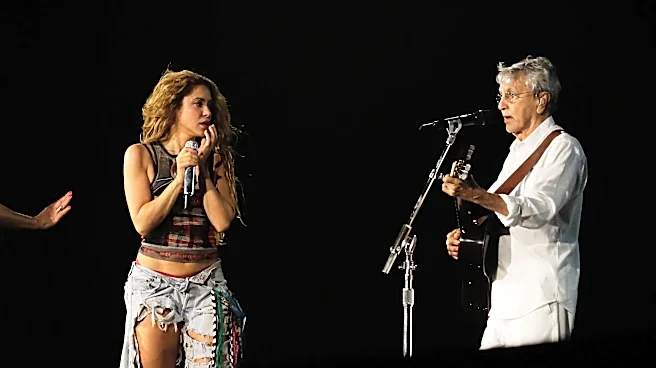
Colombian pop star Shakira performed a historic free concert on Rio de Janeiro's Copacabana Beach, attracting an estimated two million attendees. The event was part of her 'Las Mujeres Ya No Lloran' world tour and followed in the footsteps of previous
large-scale performances by artists like Madonna and Lady Gaga. Shakira took the stage an hour late, greeted by a drone display that spelled out 'I love you Brazil' in Portuguese. During her two-hour set, she performed hits such as 'Hips Don't Lie' and 'La Tortura,' concluding with 'BZRP Music Sessions #53,' a track reflecting her personal journey post-separation. The concert was not only a musical event but also an economic boon for the city, with local officials estimating it would generate 777 million reais (approximately £125 million) for the local economy.
Why It's Important?
The concert underscores Shakira's significant cultural impact and her enduring connection with Brazil, a relationship that dates back to the 1990s. Economically, the event provided a substantial boost to Rio de Janeiro, bridging financial gaps between major festive periods like Carnival and the June Saint John's Day celebrations. The influx of fans from across Europe and Latin America also highlighted the global appeal of Latin music and its role in cultural diplomacy. The concert's success demonstrates the power of music to unite diverse audiences and stimulate local economies, reinforcing Shakira's status as a symbol of regional strength and resilience.
What's Next?
Following the concert, there may be increased interest in hosting similar large-scale events in Rio de Janeiro, leveraging the city's capacity to attract international tourists and boost local businesses. The success of Shakira's performance could inspire other artists to consider free concerts as a means of engaging with fans and supporting local economies. Additionally, the event may prompt discussions among city officials and event organizers about the logistics and benefits of hosting such massive gatherings, potentially influencing future cultural and economic planning in the region.
Beyond the Headlines
The concert also highlights the role of music in cultural identity and expression, particularly in Latin America. Shakira's performance served as a celebration of Latin identity, resonating with fans who see her as a cultural ambassador. The event's success may encourage further exploration of how music can be used to foster cultural understanding and solidarity across borders. Additionally, the concert's economic impact could lead to increased investment in cultural events as a strategy for urban development and international tourism.