
What's Happening?
The Controlled Environment Agriculture (CEA) market is expected to grow significantly, reaching approximately $282.4 billion by 2032, with a compound annual growth rate (CAGR) of 12.42% from 2025 to 2032.
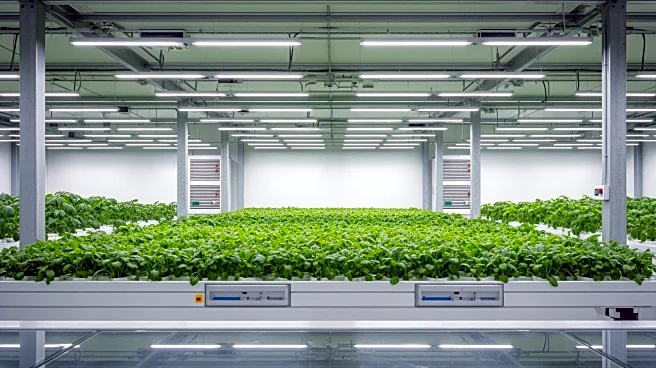
CEA involves advanced farming systems like greenhouses, hydroponics, and vertical farms, where environmental factors are precisely managed to maximize crop yield and quality. This growth is driven by increasing global food demand, declining arable land, and the impacts of climate change, which strain traditional agriculture. CEA offers a solution by enabling high-efficiency production in urban and resource-limited environments, reducing dependency on weather conditions and seasonal cycles.
Why It's Important?
The expansion of the CEA market is crucial as it addresses the challenges posed by a growing global population, projected to reach 9-10 billion by 2050, which significantly increases food requirements. With urbanization and climate variability reducing cultivable land, CEA provides a sustainable alternative that uses less water and land, mitigates food transportation emissions, and reduces pesticide use compared to conventional agriculture. This shift not only supports food security but also promotes environmental sustainability, making it a vital component of future agricultural practices.
What's Next?
As the CEA market grows, technological advancements in automation, IoT sensors, LED lighting, and precision nutrient delivery are expected to enhance operational efficiency and crop performance. The market will likely see increased investments in urban vertical farms, offering fresh produce supply in densely populated cities. Additionally, the diversification into high-value crops presents new revenue streams. However, challenges such as high initial capital requirements and operational costs remain, necessitating strategic partnerships and innovations to overcome these barriers.