








What's Happening?
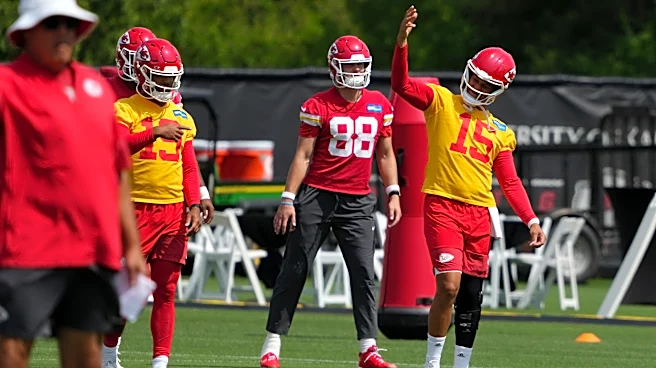
The Kansas City Chiefs have restructured the contract of their star quarterback, Patrick Mahomes, extending it through the 2033 season. This new agreement increases Mahomes' total compensation to over $500 million, with the potential to exceed $520 million through incentives.
Originally, Mahomes signed a 10-year, $450 million contract in 2020, which was a record-setting deal at the time. The restructured contract adds two more years to his tenure with the Chiefs, ensuring he remains with the team until he is 38 years old. This move is part of the Chiefs' strategy to maintain financial flexibility while surrounding Mahomes with a competitive team. The adjustment comes in the wake of recent high-value contracts for other quarterbacks, such as Dak Prescott and Joe Burrow, which have influenced the market.
Why It's Important?
This contract restructuring is significant as it reflects the Chiefs' commitment to keeping Patrick Mahomes as the cornerstone of their franchise. By securing Mahomes for an extended period, the Chiefs aim to continue their success in the NFL, having already won three Super Bowls with him as their quarterback. The deal also highlights the evolving financial landscape of the NFL, where quarterback contracts are reaching unprecedented levels. This could set a new benchmark for future negotiations involving elite quarterbacks. The Chiefs' ability to manage their salary cap effectively while retaining top talent is crucial for their long-term competitiveness in the league.
What's Next?
With the contract extension in place, the Kansas City Chiefs will focus on building a strong team around Mahomes to maximize their championship potential. The team will likely continue to evaluate and adjust their roster to ensure they have the necessary talent to compete at the highest level. Additionally, other NFL teams may look to this deal as a reference point for their own contract negotiations with key players. The Chiefs' approach to managing Mahomes' contract could influence how other franchises handle their salary cap and player retention strategies.