






What's Happening?
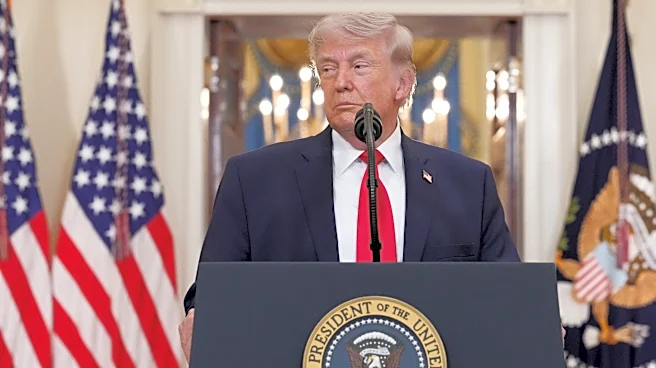
President Trump has signed an executive order aimed at reforming college sports, focusing on stabilizing the industry and limiting player transfers. The order grants federal agencies the authority to withhold funding from schools that do not comply with new
mandates regarding transfers, eligibility, and pay-for-play policies. This initiative seeks to address issues that have arisen since a $2.8 billion settlement altered the landscape of college athletics. The order includes proposals for clear eligibility limits and structured transfer rules, aiming to reduce the legal challenges faced by the NCAA and ensure fair play.
Why It's Important?
The executive order represents a significant intervention in the governance of college sports, potentially reshaping how universities manage athletics programs. By linking compliance with federal funding, the order could compel schools to adopt new policies that align with federal standards. This move may lead to increased stability in college sports, addressing concerns about the impact of frequent player transfers and financial disparities. However, it also raises questions about the balance of power between federal oversight and institutional autonomy, and could lead to legal challenges from universities and athletes.
What's Next?
The implementation of this executive order is likely to prompt legal challenges, as it may conflict with existing court orders that protect athletes' rights. The NCAA and universities will need to navigate the potential legal implications of complying with the order while adhering to court mandates. Additionally, the order calls on Congress to pass legislation to solidify these reforms, which could lead to further political debate and negotiation. The outcome of these developments will shape the future of college sports governance and the rights of student-athletes.