


What's Happening?
The Federal Reserve has decided to maintain its current interest rates, despite rising oil prices and ongoing economic pressures. This decision comes as the Federal Open Market Committee (FOMC) meeting concluded with a focus on the broader economic implications
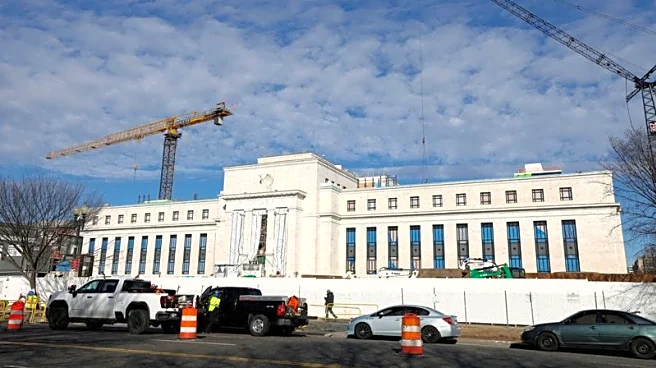
of the conflict in Iran and the potential for energy inflation to re-emerge. The Fed's decision to hold rates steady was anticipated by the market, with futures in major U.S. indexes pointing towards slight gains. However, the decision also comes amid a backdrop of political pressure from the White House, with President Trump previously threatening to dismiss Fed Chair Jerome Powell. Additionally, Fed Governor Lisa Cook has been involved in a legal case concerning allegations of mortgage fraud, which she denies. The Department of Justice had launched a probe into Powell's handling of construction at Fed buildings, but a federal judge recently dismissed subpoenas related to this investigation.
Why It's Important?
The Federal Reserve's decision to hold interest rates steady is significant for several reasons. Firstly, it reflects the Fed's cautious approach in balancing economic growth with inflationary pressures, particularly as oil prices rise. This decision could impact various sectors, including energy and consumer goods, as higher oil prices may lead to increased costs. Additionally, the political dynamics surrounding the Fed's decision highlight the ongoing tension between the central bank and the White House, which could influence future monetary policy decisions. The legal challenges faced by Fed officials, such as Governor Lisa Cook, also underscore the complex interplay between economic policy and political considerations. The Fed's stance may affect investor confidence and market stability, as stakeholders assess the implications of a 'higher for longer' interest rate environment.
What's Next?
Looking ahead, the Federal Reserve's decision to maintain interest rates could lead to further scrutiny from political leaders and market participants. The potential for energy inflation to re-enter the economic landscape may prompt the Fed to reassess its policy stance in future meetings. Additionally, the ongoing legal and political challenges faced by Fed officials could influence the central bank's decision-making process. Market participants will likely monitor upcoming economic indicators and geopolitical developments, particularly in the energy sector, to gauge the Fed's future actions. The Fed's communication strategy and any shifts in its policy outlook will be closely watched by investors and policymakers alike.
Beyond the Headlines
Beyond the immediate economic implications, the Federal Reserve's decision highlights broader issues related to the independence of central banks and the influence of political pressures on monetary policy. The legal challenges faced by Fed officials, such as the case involving Governor Lisa Cook, raise questions about the intersection of legal accountability and political motivations. The Fed's ability to navigate these challenges while maintaining its policy objectives will be crucial in preserving its credibility and effectiveness. Additionally, the potential for energy inflation to impact consumer prices and economic growth underscores the interconnectedness of global markets and the importance of coordinated policy responses.