






What's Happening?
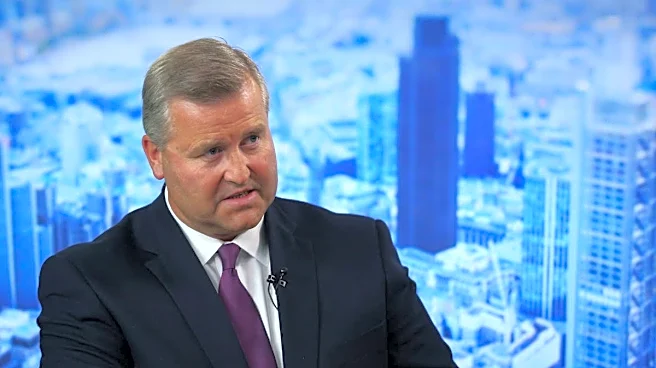
On May 26, BP's board unanimously decided to remove Albert Manifold from his position as chair and director due to serious concerns regarding governance standards, oversight, and conduct. Amanda Blanc, the senior independent director at BP, acknowledged
Manifold's contributions to the company but emphasized the board's surprise and disappointment over the governance issues, which they found unacceptable. Ian Tyler has been appointed as the interim chair, effective immediately. Tyler, who joined BP's board as a non-executive director in April 2025 and chaired the remuneration committee, expressed confidence in CEO Meg O'Neill and highlighted BP's strong operational performance and financial discipline.
Why It's Important?
The removal of Albert Manifold as BP's chair underscores the critical importance of governance and conduct standards in large corporations. This decisive action by BP's board reflects a commitment to maintaining high ethical standards and accountability, which are essential for investor confidence and corporate reputation. The swift appointment of Ian Tyler as interim chair suggests that BP is keen to ensure stability and continuity in its leadership. This development may influence other companies to reassess their governance structures and conduct policies, emphasizing the role of HR leaders in establishing robust mechanisms for crisis management and succession planning.
What's Next?
BP has initiated a succession process to find a permanent chair, indicating a focus on long-term leadership stability. The company's board is likely to continue emphasizing governance and conduct standards to prevent similar issues in the future. Stakeholders, including investors and employees, will be closely monitoring BP's actions to ensure that the company adheres to its stated values and maintains its operational and financial performance. The broader industry may also take note of BP's approach, potentially leading to increased scrutiny and reforms in governance practices across the sector.
Beyond the Headlines
This incident highlights the evolving role of corporate culture as a critical factor in business performance and reputation. As noted by HR leaders, culture is increasingly seen as a performance lever and a reputational safeguard. The expectation for Chief Human Resources Officers (CHROs) to rigorously measure and manage corporate culture is growing, reflecting a shift in how companies view the relationship between culture and business outcomes. This development may lead to more comprehensive and transparent governance frameworks in the corporate world.