


What's Happening?
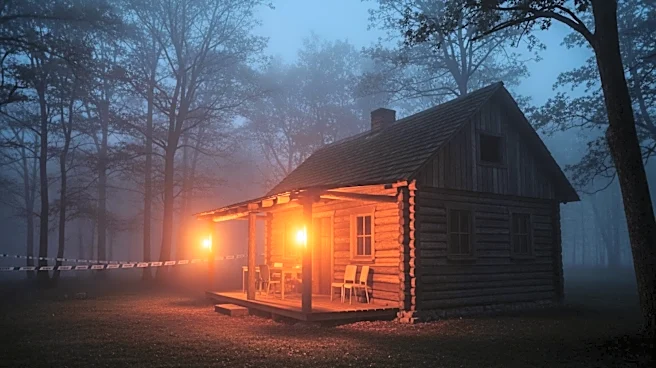
The Blair Witch Project, a film released in 1999, has been described as a feelgood movie by some viewers, despite its horror genre. The film follows three film students who venture into the Maryland wilderness to document a legendary witch, only to face
psychological terror and an uncertain fate. The movie's found-footage style and lack of visible horror elements create a sense of dread that captivates audiences. For some, including the author of the article, the film provides a comforting experience by allowing them to confront fear in a controlled environment. This paradoxical comfort stems from the film's ability to momentarily distract viewers from their real-life anxieties.
Why It's Important?
The Blair Witch Project's impact on the horror genre and its audience is significant. It demonstrates how horror films can serve as a therapeutic tool for some individuals, offering a safe space to explore fear and anxiety. The film's success, grossing nearly $250 million at the box office, highlights the public's fascination with horror and its potential to evoke complex emotional responses. This phenomenon suggests that horror films can play a role in mental health management, providing a unique form of escapism and emotional release for viewers who find solace in fictional fear.