
What's Happening?
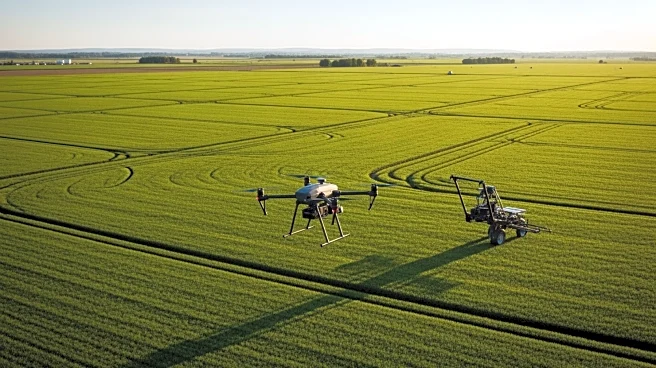
The demand for smart agriculture solutions in the United States is projected to grow significantly, with market value expected to rise from USD 5.8 billion in 2025 to USD 11.0 billion by 2035, reflecting
a compound annual growth rate (CAGR) of 6.6%. This growth is largely driven by the adoption of precision farming technologies aimed at improving crop yields, reducing resource consumption, and addressing labor shortages. Key components of this market include hardware such as sensors and GPS-guided machinery, which account for 45% of the market, followed by software and services. The West, South, and Northeast regions of the U.S. are leading in adoption due to advanced agribusiness operations and government support for sustainable farming technologies. Major players in the market include John Deere, Trimble Inc., AGCO Corporation, Raven Industries, and Topcon Positioning Systems.
Why It's Important?
The expansion of smart agriculture solutions is crucial for enhancing the efficiency and sustainability of U.S. agriculture. By integrating advanced technologies, farms can optimize resource use, improve productivity, and reduce environmental impact. This is particularly important in the face of challenges such as climate change, water scarcity, and labor shortages. The adoption of these technologies supports the U.S. agricultural sector's competitiveness and resilience, ensuring food security and economic stability. Additionally, the growth of this market presents significant opportunities for technology providers and service companies involved in the development and deployment of smart farming solutions.
What's Next?
As the market for smart agriculture solutions continues to grow, further advancements in technology are expected to drive adoption. Innovations such as autonomous equipment, predictive analytics, and robotics will expand the application scope and enhance the efficiency of farming operations. Government support and investment in digital cultivation practices will also play a critical role in facilitating the transition to smart agriculture. The focus will likely remain on improving affordability and accessibility for small and mid-sized farms, which are poised to contribute significantly to future demand.
Beyond the Headlines
The shift towards smart agriculture solutions also raises important considerations regarding data privacy and security, as farms increasingly rely on digital platforms for operational decision-making. Ensuring robust data protection measures will be essential to maintaining trust and encouraging widespread adoption. Additionally, the integration of these technologies may require significant training and support for farmers, highlighting the need for comprehensive educational programs and technical assistance.