



What's Happening?
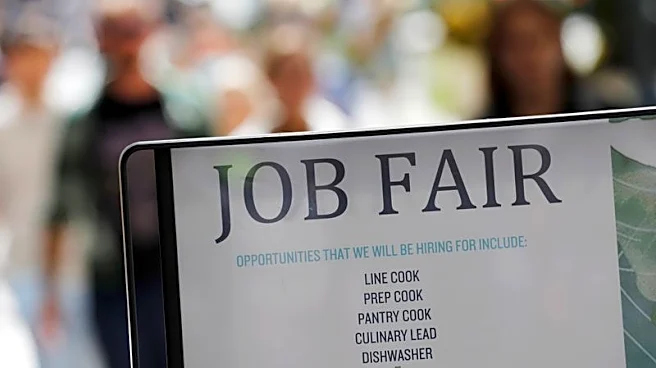
The U.S. Labor Department reported a decrease in jobless aid applications for the week ending March 28, with filings dropping by 9,000 to 202,000. This figure is below the 212,000 expected by analysts and remains within the historical range of recent
years. Despite a softening labor market and rising energy costs due to the ongoing conflict with Iran, layoffs have remained sparse. High-profile companies like Oracle, Morgan Stanley, Block, UPS, and Amazon have recently announced job cuts. The labor market has been in a 'low-hire, low-fire' state, maintaining a low unemployment rate but making it difficult for those unemployed to find new jobs. The March jobs report is anticipated to provide further insights into the labor market's condition.
Why It's Important?
The decrease in jobless filings suggests resilience in the U.S. labor market despite economic uncertainties, including the Iran war's impact on energy prices. This stability is crucial for economic stakeholders, as it indicates that the job market is not experiencing widespread layoffs, which could otherwise lead to increased unemployment and economic instability. However, the ongoing conflict and high inflation rates pose risks to economic growth and consumer spending. The Federal Reserve's decision to maintain interest rates reflects concerns over these economic pressures, highlighting the delicate balance policymakers must maintain to support economic stability.
What's Next?
The upcoming March jobs report will be critical in assessing the labor market's health and guiding future economic policies. Stakeholders, including businesses and policymakers, will closely monitor these developments to adjust strategies accordingly. The Federal Reserve's future interest rate decisions will likely depend on the labor market's performance and inflation trends. Additionally, the ongoing Iran conflict's impact on energy prices will continue to be a significant factor influencing economic conditions.