





What's Happening?
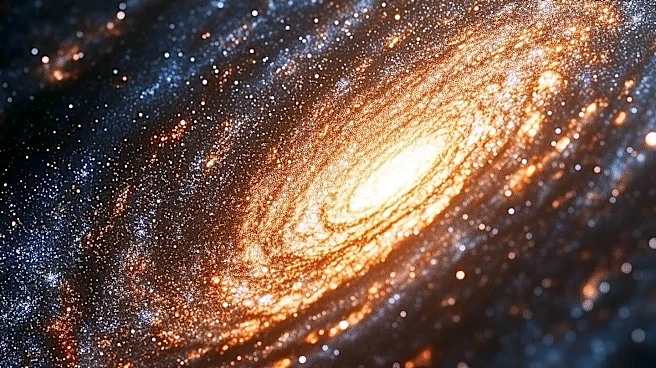
Astronomy magazine Editor Emeritus Dave Eicher has highlighted the best galaxies visible during the spring season in the Northern Hemisphere. This period, known as galaxy season, occurs when Earth's nightside faces away from the plane of the Milky Way,
offering optimal conditions for viewing distant galaxies. Eicher recommends using telescopes or large binoculars to observe bright galaxies in constellations such as Leo, Ursa Major, Coma Berenices, and Virgo. Notable groups include the Leo Triplet, consisting of M65, M66, and NGC 3628, and the bright galaxies M81 and M82 in Ursa Major. The Virgo Cluster also offers numerous galaxies visible primarily through telescopes.
Why It's Important?
The opportunity to observe galaxies during this season is significant for amateur astronomers and enthusiasts, as it allows for the exploration of distant celestial objects that are not typically visible. This period enhances public interest in astronomy and encourages educational activities related to space observation. The visibility of these galaxies can inspire further research and engagement with astronomical phenomena, fostering a deeper understanding of the universe. Additionally, it supports the use of telescopes and binoculars, promoting technological advancements in observational equipment.
What's Next?
As galaxy season continues, enthusiasts are encouraged to take advantage of clear nights to observe these celestial wonders. Astronomy clubs and educational institutions may organize events and workshops to facilitate public engagement and learning. The increased interest in astronomy during this period could lead to more investments in observational technology and educational programs. Future astronomical events, such as eclipses and planetary alignments, may also attract attention, further promoting the field of astronomy.
Beyond the Headlines
The visibility of galaxies during this season highlights the importance of preserving dark skies, free from light pollution, to ensure optimal conditions for astronomical observation. This period also underscores the cultural and scientific significance of astronomy, as it connects people with the broader universe and encourages curiosity and exploration. The event may lead to discussions on the ethical implications of space exploration and the need for sustainable practices in observing and interacting with celestial bodies.