








What's Happening?
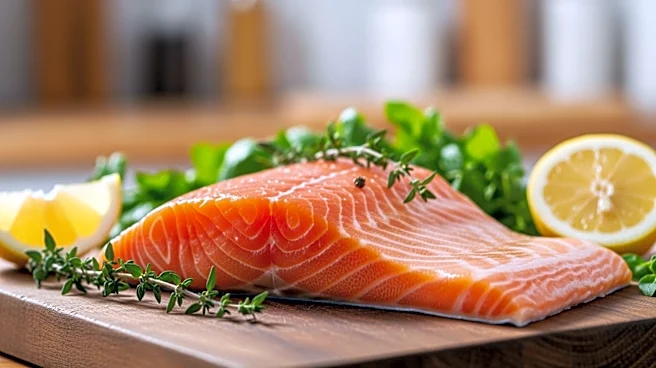
Salmon has become a staple in American kitchens due to its rich flavor, versatility, and nutritional benefits. The fish is available in two main types: Atlantic and Pacific. Atlantic salmon, mostly farm-raised, is known for its mild taste and tender texture,
making it ideal for various cooking methods. In contrast, Pacific salmon, often wild-caught, offers a firmer texture and more intense flavor. The distinctive orange color of salmon is achieved through natural pigments in their diet or added pigments in farmed varieties. Salmon is rich in omega-3 fatty acids, vitamins, and minerals, making it a nutritious choice. However, there are differences in nutritional content between farmed and wild salmon, with farmed salmon being fattier and potentially containing more pollutants.
Why It's Important?
Salmon's popularity in the U.S. highlights the growing consumer interest in healthy and versatile food options. Its nutritional profile, including high-quality protein and omega-3 fatty acids, supports heart health and overall well-being. The fish's adaptability in various cuisines, from sushi to smoked dishes, underscores its culinary significance. The choice between farmed and wild salmon also reflects broader environmental and health considerations, as consumers weigh factors like sustainability, cost, and potential exposure to pollutants. This ongoing preference for salmon impacts the fishing industry, dietary trends, and food marketing strategies.