



What's Happening?
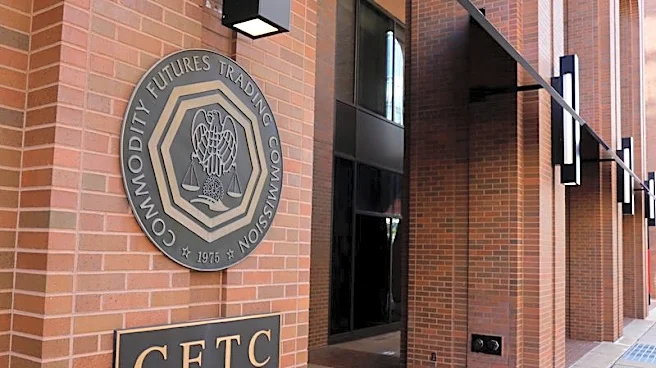
The Commodity Futures Trading Commission (CFTC) has filed a lawsuit against the states of Arizona, Connecticut, and Illinois over their attempts to regulate prediction markets. The CFTC argues that the federal government holds exclusive jurisdiction over these
markets, which are akin to sports betting but involve predictions on various events. CFTC Chairman Michael S. Selig stated that Congress rejected fragmented state regulations due to concerns over consumer protection and increased risks of fraud. This legal action comes amid congressional efforts to limit prediction market activities, including banning trades on elections, wars, and sports.
Why It's Important?
The lawsuit underscores the ongoing tension between state and federal authorities over the regulation of prediction markets, a rapidly growing sector within the sports betting industry. The outcome of this legal battle could significantly impact how prediction markets operate across the United States, potentially affecting companies like FanDuel and DraftKings. If the CFTC prevails, it could lead to a more centralized regulatory framework, enhancing consumer protection and reducing fraud risks. Conversely, if states retain regulatory power, it may result in a patchwork of regulations that could complicate market operations and investor confidence.
What's Next?
The legal proceedings will likely involve extensive debates over jurisdictional authority and the scope of federal versus state regulatory powers. Stakeholders, including prediction market operators and state governments, will closely monitor the case's progress. The decision could set a precedent for future regulatory approaches in the sports betting industry. Additionally, Congress may continue to explore legislative measures to further define the boundaries of prediction market activities, potentially influencing the industry's evolution.