



What's Happening?
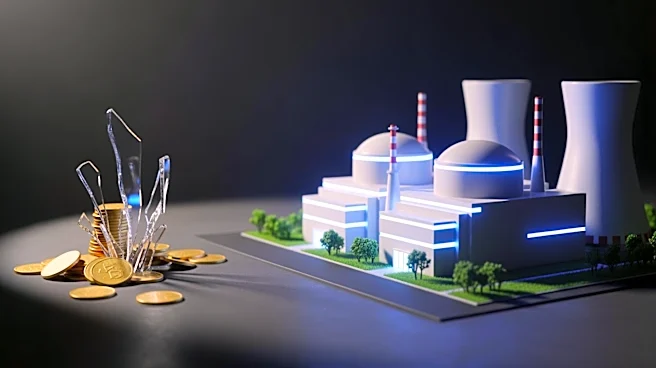
Zap Energy, a fusion startup, has announced plans to develop nuclear fission reactors alongside its primary fusion devices. The decision comes after the company assessed that building a fission plant would be faster than waiting for fusion technology
to become commercially viable. The company's new CEO, Zabrina Johal, highlighted that fission and fusion are complementary technologies. Zap Energy has secured over $300 million in investment, positioning it as one of the best-funded startups in the sector. The move is driven by the increasing energy demands from artificial intelligence data centers, which are expected to triple by 2030. The startup's fission reactor design is based on the 4S model, developed in collaboration with Toshiba and Japan's energy industry research institute. Zap Energy aims to start generating revenue from its fission reactors within a year, targeting federal programs and companies with high electricity needs.
Why It's Important?
The development of fission reactors by Zap Energy is significant as it addresses the immediate energy needs of technology companies, particularly those involved in artificial intelligence. As fusion technology remains a decade away from commercial readiness, fission reactors offer a more immediate solution to the growing energy demands. This move could potentially accelerate the transition to cleaner energy sources, reducing reliance on fossil fuels. The initiative also highlights the strategic importance of nuclear energy in meeting future energy needs, especially in sectors with high electricity consumption. By tapping into federal programs and corporate demand, Zap Energy could play a pivotal role in shaping the energy landscape, influencing policy decisions and investment in nuclear technology.
What's Next?
Zap Energy plans to begin generating revenue from its fission reactors within the next year. The company is likely to engage with federal programs from the departments of defense and energy, as well as private companies requiring substantial electricity. As the demand for energy continues to rise, particularly from AI data centers, Zap Energy's fission reactors could become a critical component of the energy infrastructure. The success of this initiative may prompt further investment in nuclear technology and influence energy policy, potentially leading to increased support for nuclear energy development.