



What's Happening?
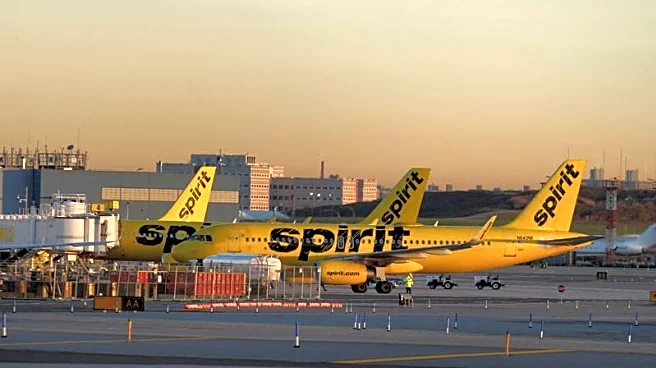
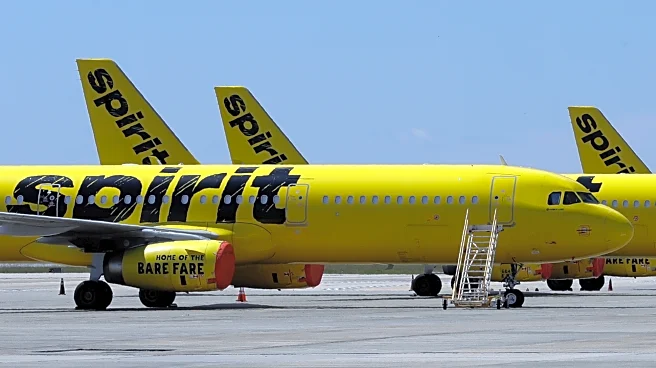
Spirit Airlines has announced a deal with creditors that will allow it to emerge from bankruptcy by late spring or early summer. The airline, which filed for bankruptcy for the second time last year, plans to significantly reduce its fleet and cut staff
to lower debt and operating costs. Spirit will offer nearly 40% fewer flights and seats this summer compared to the same period in 2024. The restructuring aims to make Spirit a leaner and more competitive airline. The airline's low-fare model has historically influenced larger carriers to offer no-frill seats, and its closure could have led to higher fares across the industry.
Why It's Important?
The restructuring of Spirit Airlines is significant for the U.S. aviation industry as it maintains competitive pressure on larger carriers to keep fares low. Spirit's survival as a smaller entity could stabilize the low-cost segment of the market, which has been under pressure due to rising operational costs and changing consumer preferences post-pandemic. The airline's ability to emerge from bankruptcy with reduced debt and operating costs could serve as a model for other struggling carriers. However, the reduction in flights and staff may impact employment and service availability in certain regions.
What's Next?
Spirit Airlines will focus on high-demand travel periods and routes, particularly from major Florida airports and the New York area. The airline plans to expand premium-class seating and update its loyalty program. The restructuring will involve further fleet reductions and potential staff adjustments. Spirit's emergence from bankruptcy could also open opportunities for future industry transactions, including potential mergers or acquisitions, as the airline seeks to build a sustainably profitable entity.