
What's Happening?
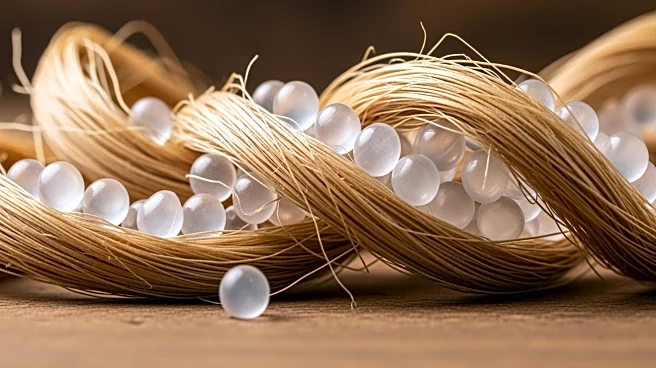
D&L Industries Inc., through its subsidiary D&L Polymer & Colours Inc., has launched a new product: 100 percent abaca pellets designed for sustainable plastic production. This innovation marks the company's
entry into the commercial stage of natural fiber-based plastics. The abaca, known as the strongest natural fiber globally, is transformed into a ready-to-use additive that integrates seamlessly into the processes of plastic compounders and processors. The company has started marketing these pellets to potential customers across Asia and the Philippines for testing. According to Lester Lao, DLPC president and CEO, the pelletization process makes natural fibers easy to use at scale, allowing manufacturers to incorporate sustainability into their products without altering their existing processes.
Why It's Important?
The introduction of abaca pellets by D&L Industries represents a significant advancement in the field of sustainable materials. By providing a renewable and strong natural fiber in a standardized format, the company is enabling a broader adoption of eco-friendly materials in the plastics industry. This development could lead to a reduction in the reliance on traditional plastics, which are often derived from non-renewable resources and contribute to environmental pollution. The ability to use abaca and other locally sourced fibers like pineapple and vetiver in plastic production could also boost local economies and promote sustainable agricultural practices. This innovation aligns with global efforts to reduce plastic waste and promote the use of biodegradable materials.
What's Next?
D&L Industries plans to continue marketing the abaca pellets to a wider range of customers, potentially expanding its reach beyond Asia and the Philippines. The company may also explore the use of other natural fibers in its products, further diversifying its offerings in the sustainable materials market. As more manufacturers adopt these pellets, there could be a significant shift in the plastics industry towards more sustainable practices. This could prompt other companies to develop similar technologies, increasing competition and innovation in the field of sustainable materials.