



What's Happening?
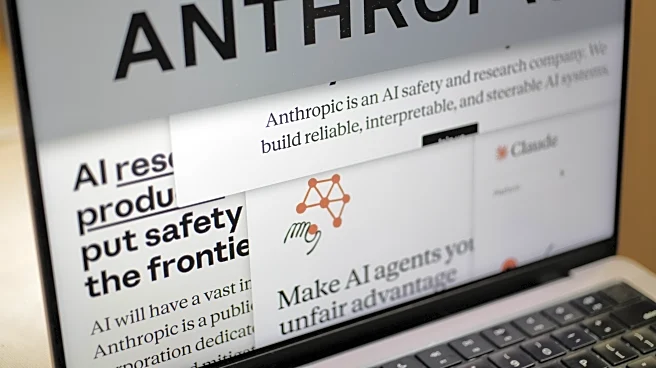
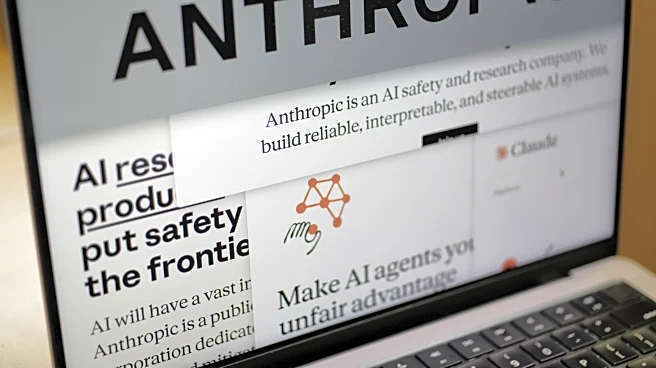
OpenAI CEO Sam Altman has admitted that the company's recent agreement with the Pentagon was executed in a rushed and 'sloppy' manner. This admission comes after a public clash with Anthropic, a rival AI company, which had insisted that its technology
should not be used for mass surveillance or autonomous weapons. The deal allows the Pentagon to deploy OpenAI's AI models within its classified network. Altman stated that OpenAI is working to amend the agreement to ensure that its AI is not used for domestic surveillance and that intelligence agencies like the NSA cannot rely on its services. The announcement followed a surge in support for Anthropic, whose app recently topped Apple's download charts. OpenAI plans to hold an all-hands meeting to address employee concerns about the deal.
Why It's Important?
The deal between OpenAI and the Pentagon highlights the growing intersection of artificial intelligence and national security. The admission of a rushed agreement underscores the complexities and ethical considerations involved in deploying AI technologies in sensitive areas. The rivalry between OpenAI and Anthropic also reflects broader industry tensions over the ethical use of AI, particularly in government and defense contexts. The outcome of this situation could influence future AI policy and regulation, impacting how AI is integrated into national security frameworks. Companies like OpenAI and Anthropic are at the forefront of these discussions, and their actions could set precedents for how AI is ethically managed in high-stakes environments.
What's Next?
OpenAI's decision to amend its agreement with the Pentagon suggests that further negotiations and clarifications are likely. The company's upcoming all-hands meeting may provide more insights into its future strategy and how it plans to address ethical concerns. Additionally, the ongoing rivalry with Anthropic could lead to further developments in AI policy, especially if other companies or government agencies weigh in on the debate. The situation may also prompt broader industry discussions on the ethical deployment of AI in defense and surveillance, potentially influencing future regulatory frameworks.