


What's Happening?
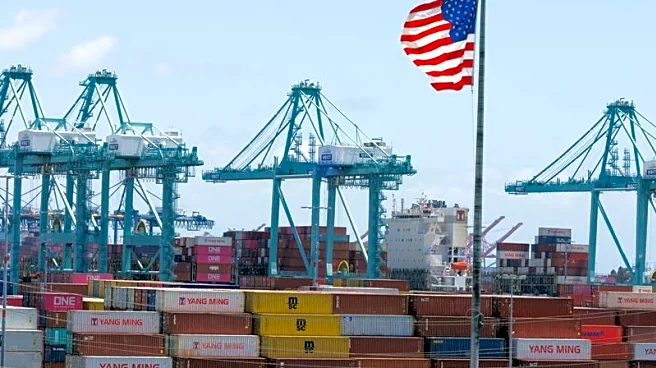
The U.S. trade deficit experienced a significant reduction of over 25% in January 2026, falling to $54.5 billion from $72.9 billion in December. This decrease was primarily driven by a rise in exports, which increased by 5.5% to $302.1 billion, while
imports saw a slight decline of 0.7% to $356.6 billion. The reduction in the trade deficit was largely attributed to increased exports of industrial supplies, including gold and other precious metals, despite a decrease in consumer goods exports. The services sector also contributed positively, with a surplus increase of $1 billion. This development follows a period of volatility in trade deficits during President Trump's second term, influenced by shifting tariff policies and importers' responses to these changes.
Why It's Important?
The drop in the trade deficit is a notable development in the context of President Trump's tariff policies, which have been a focal point of his administration's economic strategy. The reduction in the deficit could be seen as a temporary win for the administration, reflecting the impact of tariff adjustments and changes in trade dynamics. However, the overall effect of these tariffs on the trade deficit remains uncertain, as fluctuations have been observed in response to policy shifts. The trade deficit is a critical economic indicator, influencing GDP growth expectations and reflecting the balance of trade between the U.S. and other countries. The recent data highlights the ongoing challenges and complexities in managing trade policies and their economic implications.
What's Next?
The future trajectory of the U.S. trade deficit will depend on several factors, including further tariff adjustments and global economic conditions. The upcoming release of February's trade data will provide additional insights into the impact of recent Supreme Court decisions on tariffs and subsequent policy changes. Stakeholders, including policymakers and businesses, will closely monitor these developments to assess their implications for economic growth and trade relations. The ongoing legal challenges and adjustments in tariff policies suggest that the trade landscape will continue to evolve, requiring adaptive strategies from both the government and the private sector.