


What's Happening?
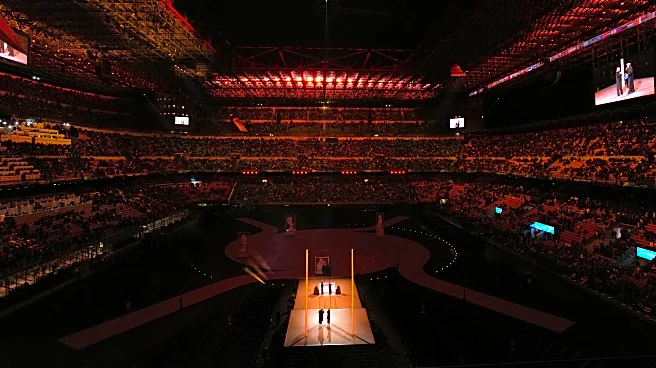
The organizers of the Winter Olympics opening ceremony have addressed speculation regarding Mariah Carey's performance, where she sang Domenico Modugno's 'Nel Blu, dipinto di Blu' and her own song 'Nothing Is Impossible'. Social media users noted discrepancies between her lip movements and the music, leading to questions about lip-syncing. Maria Laura Iascone, the show director, confirmed the existence of a pre-recording but did not clarify if it was used during the performance. She emphasized that pre-recordings are standard practice for high-level broadcasts to ensure quality. Despite the controversy, Iascone praised Carey's performance as extraordinary and noted that Carey was not paid for her participation. The ceremony involved complex
coordination with over 1,300 performers and 500 musicians, necessitating some pre-recorded elements for seamless execution.
Why It's Important?
The controversy surrounding Mariah Carey's performance highlights the challenges and expectations of live performances at major international events. The use of pre-recordings, while common, raises questions about authenticity and audience expectations. This incident underscores the balance between delivering a flawless broadcast and maintaining the integrity of live performances. The situation also reflects on the broader entertainment industry practices, where the pressure to deliver perfect performances can lead to reliance on technology. The organizers' response and the public's reaction could influence future decisions on how live performances are managed at such high-profile events.
What's Next?
As the Winter Olympics continue, organizers may face increased scrutiny over the authenticity of performances and the use of pre-recordings. This could lead to more transparent communication about performance practices in future events. Additionally, the incident may prompt discussions within the entertainment industry about the balance between live performance authenticity and broadcast quality. Stakeholders, including artists and event organizers, might consider revising guidelines to address public concerns while ensuring high-quality productions.