
What's Happening?
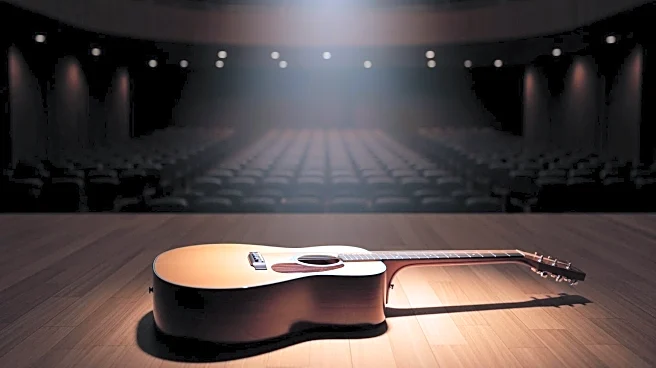
Country singer Brantley Gilbert has addressed his involvement in the Turning Point USA 'All-American Halftime Show,' which is positioned as an alternative to the NFL's official Super Bowl halftime show. The official halftime show will feature Grammy winner Bad Bunny, while the Turning Point event, set for Super Bowl Sunday, includes performances by Kid Rock, Lee Brice, and Gabby Barrett. Gilbert, known for hits like 'Country Must Be Country Wide,' responded to criticism by emphasizing his personal journey and commitment to sharing his story through music. He expressed that his participation is not intended to be divisive but rather a celebration of faith, family, and freedom. Gilbert highlighted his background as a recovering addict and his dedication
to supporting military families, stating that his performance is a personal milestone for his family.
Why It's Important?
The Turning Point USA halftime show represents a cultural and political statement, offering an alternative to the NFL's official event. This move underscores ongoing cultural divides in the U.S., particularly in entertainment and sports. By featuring artists like Brantley Gilbert and Kid Rock, the event appeals to audiences who may feel underrepresented by mainstream media. Gilbert's participation highlights the intersection of personal narratives and broader cultural themes, such as patriotism and faith. The event's framing as a celebration of American values may resonate with certain demographics, potentially influencing public discourse around national identity and entertainment.
What's Next?
The Turning Point USA halftime show will be broadcast on various platforms, including social media and conservative outlets like The Daily Wire and TBN. This distribution strategy aims to reach a wide audience, potentially amplifying its cultural impact. As the event unfolds, reactions from both supporters and critics will likely shape future discussions about representation in major entertainment events. The response from viewers and media could influence how similar events are organized and perceived in the future, particularly in terms of balancing diverse cultural expressions.