

What's Happening?
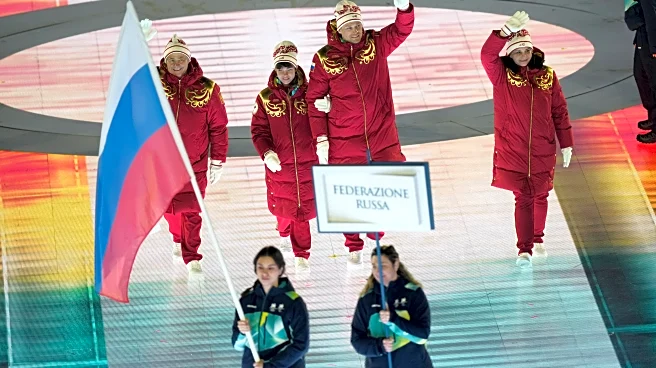
The Russian flag was prominently displayed during the opening ceremony of the Milan Cortina Winter Paralympics, marking its first appearance at the Paralympics since the 2014 Winter Games in Sochi. This event, held at the Arena di Verona, saw Russian athletes
participating despite previous bans due to a state-sponsored doping program and subsequent sanctions following the 2022 invasion of Ukraine. The ceremony was marked by a mix of applause and boos as Russian athletes entered, while Ukraine and six other nations boycotted the event for political reasons. The absence of Iran's flag was noted due to the withdrawal of its sole athlete amid escalating Middle East tensions. The ceremony featured performances by notable artists and highlighted the participation of over 600 athletes, with a record number of female competitors.
Why It's Important?
The return of the Russian flag at the Paralympics signals a potential shift in international sports diplomacy, as Russia seeks reintegration into global sporting events. This development occurs against a backdrop of ongoing geopolitical tensions, particularly the conflict involving Iran, which has implications for international relations and sports. The boycotts by Ukraine and other nations underscore the intersection of politics and sports, highlighting how international events can serve as platforms for political statements. The participation of Russian athletes, despite previous sanctions, may influence future decisions by international sports bodies regarding the inclusion of nations with contentious political backgrounds.
What's Next?
The ongoing geopolitical tensions, particularly in the Middle East, may continue to affect international sporting events, with potential for further boycotts or protests. The International Paralympic Committee and other sports organizations may face increased pressure to address the political dimensions of global sports participation. Additionally, the performance of Russian athletes and their reception at the Games could influence Russia's future participation in international sports, including the upcoming 2028 Summer Games in Los Angeles.