


What's Happening?
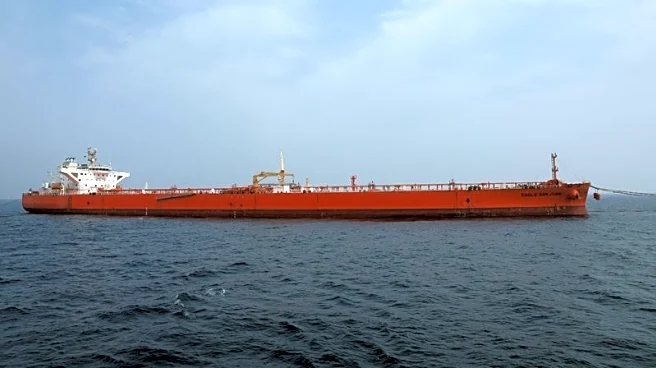
Ship insurers are experiencing a surge in premiums for vessels navigating the Strait of Hormuz due to increased risks from ongoing conflicts in the Middle East. The conflict, sparked by US-Israeli strikes on Iran, has led to heightened safety concerns,
prompting some insurers to issue cancellation notices for war risk policies. However, these notices do not necessarily terminate coverage, as war risk insurance remains available for those willing to pay the adjusted terms. The cost of war risk insurance has escalated significantly, with premiums potentially reaching tens of millions of dollars for a single trip through the strait. This increase is attributed to the need for special cover to cross the strait, as insurers reassess the risks involved.
Why It's Important?
The rising insurance premiums have significant implications for the global shipping industry, particularly for vessels transporting oil and gas through the Strait of Hormuz, a critical chokepoint for global energy supplies. The increased costs could lead to higher shipping expenses, which may be passed on to consumers, affecting global oil prices. Additionally, the heightened risk environment may deter some shipping companies from using this route, potentially disrupting supply chains and leading to increased volatility in the energy market. The situation underscores the broader geopolitical tensions in the region and their impact on international trade and economic stability.
What's Next?
The U.S. has announced a shipping insurance initiative to facilitate safer crossings of the Strait of Hormuz, involving naval escorts. This initiative, if successful, could lead to a reduction in insurance rates as the perceived risk decreases. However, the effectiveness of this initiative depends on the cooperation of Western and other powers, which have so far been reluctant to engage amid the ongoing conflict. The situation remains fluid, and further developments in the geopolitical landscape could influence the insurance market and shipping routes in the region.