





What's Happening?
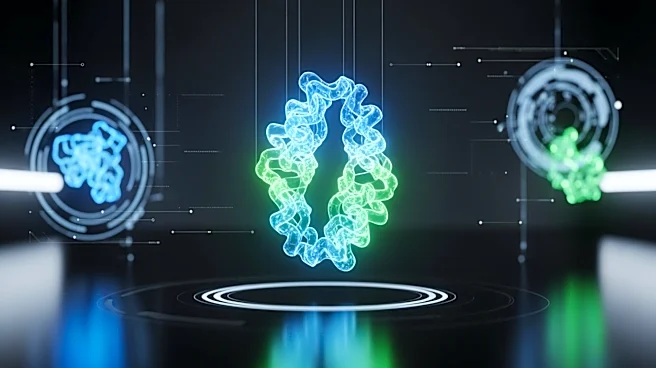
Researchers at Queensland University of Technology have developed AI-designed protein switches that activate only when detecting specific targets, paving the way for a new generation of low-cost biosensors. These protein switches can function inside living
bacterial cells and can be linked to electrodes to produce electrical signals, akin to glucose meters. The study, led by Kirill Alexandrov, highlights the potential of these proteins to act as molecular machines that sense environmental changes and respond accordingly. The research demonstrates that these artificial receptors do not require significant structural changes to function, challenging previous assumptions in protein science. The team successfully created switches responsive to small molecules, peptides, and proteins, and demonstrated their use in electrochemical biosensors for steroid detection.
Why It's Important?
The development of AI-designed protein switches represents a significant advancement in synthetic biology, offering a versatile tool for creating biosensors that are both cost-effective and efficient. These innovations could transform various fields, including medicine, environmental monitoring, and biotechnology, by providing portable diagnostic devices and intelligent environmental sensing systems. The ability to design proteins that can detect specific molecules and trigger responses expands the possibilities for protein engineering, potentially leading to breakthroughs in how diseases are diagnosed and monitored. This technology could also facilitate the development of engineered cells that respond to chemical signals, enhancing the capabilities of synthetic biology applications.
What's Next?
The next steps for this technology involve further testing and refinement to ensure its reliability and effectiveness in real-world applications. Researchers may focus on expanding the range of detectable molecules and improving the sensitivity and specificity of the protein switches. Potential collaborations with industry partners could accelerate the commercialization of these biosensors, making them accessible for widespread use in healthcare and environmental monitoring. Additionally, regulatory approvals will be necessary to ensure the safety and efficacy of these devices before they can be deployed in clinical and environmental settings.
Beyond the Headlines
The implications of AI-designed protein switches extend beyond immediate applications, potentially influencing the future of synthetic biology and protein engineering. By providing new insights into protein regulation, this research could lead to innovative strategies for designing biosensors and other protein-based technologies. The ability to create proteins that function as molecular switches without significant structural changes may inspire further exploration into the mechanisms of natural protein regulation, offering a deeper understanding of biological processes. This advancement also raises ethical considerations regarding the use of synthetic biology in various sectors, necessitating discussions on the responsible development and deployment of such technologies.