






What's Happening?
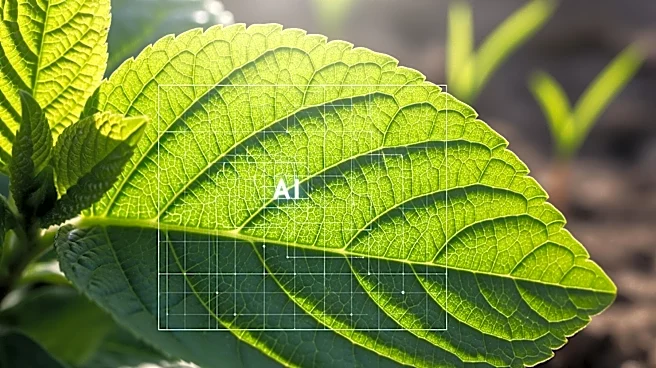
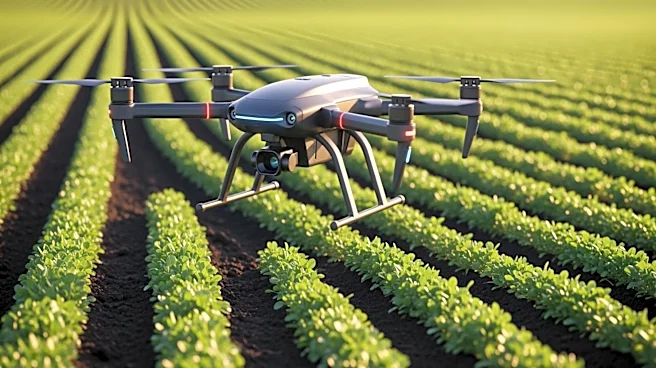
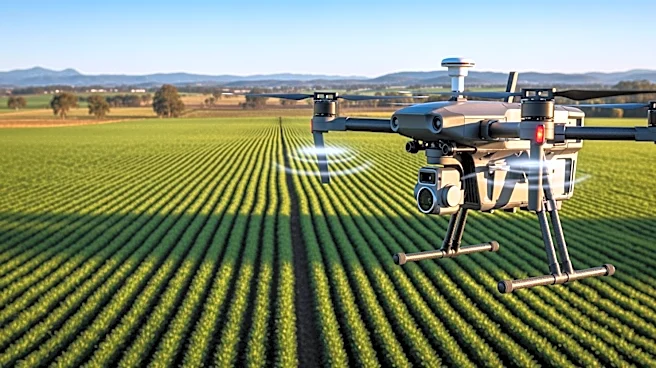
Artificial intelligence is increasingly being integrated into agricultural practices, offering tools that enhance efficiency in farming operations. AI technologies, such as machine learning systems, are being used to analyze data from satellite imagery,
soil sensors, and GPS-enabled equipment to optimize crop health, soil conditions, and resource use. Despite these advancements, the fundamental need for physical land remains unchanged. The global demand for food is projected to rise significantly, with the United Nations estimating a population increase to 9.7 billion by 2050. This necessitates a 50% increase in agricultural production compared to 2012 levels. However, the availability of farmland is not expanding at the same rate, as agricultural land is often converted for urban development and infrastructure.
Why It's Important?
The integration of AI in agriculture highlights a critical intersection between technology and traditional farming practices. While AI can significantly improve the efficiency of land use and resource management, it cannot replace the essential physical components of agriculture, such as soil and water. This underscores the ongoing importance of farmland, which remains a finite resource. As AI-driven technologies continue to evolve, they offer potential solutions to increase productivity and address food security challenges. However, the reliance on physical land for food production emphasizes the need for sustainable land management practices and policies that balance technological advancements with environmental conservation.
What's Next?
As AI technologies continue to develop, their role in agriculture is expected to expand, potentially leading to more precise and efficient farming practices. Policymakers and agricultural stakeholders may need to address the challenges of land use allocation, particularly as demand for digital infrastructure, such as data centers, competes with agricultural needs. The future of agriculture will likely involve a combination of technological innovation and sustainable land management strategies to meet the growing global food demand while preserving essential natural resources.