



What's Happening?
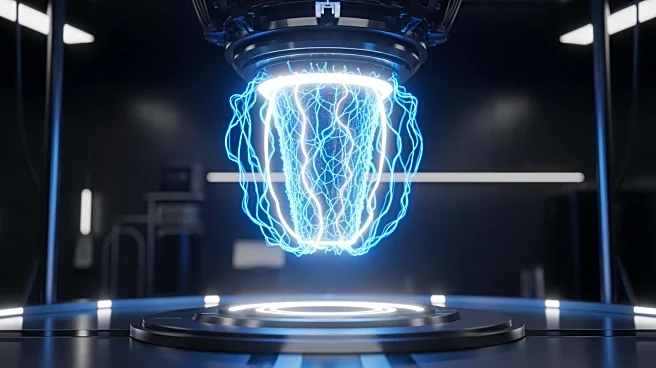
OpenAI is reportedly in discussions with Helion Energy, a fusion startup based in Everett, Washington, to secure a supply of electricity generated from fusion energy. This potential deal would guarantee OpenAI access to a portion of Helion's power generation,
with projections of up to 5 GW by 2030 and 50 GW by 2035. Helion has achieved significant milestones with its Polaris prototype, marking breakthroughs in the private fusion industry. The collaboration is seen as a strategic move by OpenAI to address the increasing energy demands of large-scale AI models, which require substantial computing power and energy resources.
Why It's Important?
The partnership between OpenAI and Helion Energy highlights a shift in the AI industry, where energy access is becoming a critical factor in sustaining and expanding AI capabilities. As AI models grow in complexity, the demand for reliable and sustainable energy sources increases. Fusion energy, if commercially viable, offers a clean and carbon-free alternative to traditional energy sources, potentially reducing operational costs and environmental impact. This move could set a precedent for other tech companies to secure dedicated energy supplies, influencing the long-term infrastructure strategies of the AI industry.
What's Next?
If the deal proceeds, OpenAI could become one of the first major AI companies to utilize fusion energy, positioning itself advantageously in the competitive landscape. The success of this partnership depends on Helion's ability to scale its fusion technology to meet the promised energy outputs. The broader implications for the energy market include potential shifts towards fusion as a mainstream energy source, impacting energy pricing and availability. Other tech companies may follow suit, seeking similar partnerships to ensure energy security and sustainability.