



What's Happening?
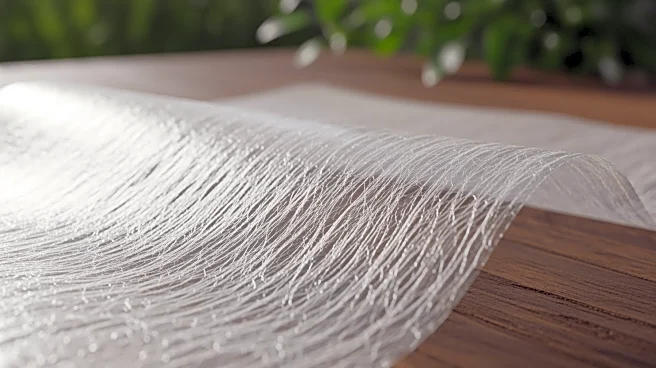
Researchers at the University of São Paulo and EMBRAPA have developed a biofilm from the skin of the tambatinga fish, a crossbreed of tambaqui and pirapitinga, as a sustainable alternative for food packaging. This biofilm is rich in collagen and offers high resistance, effective UV blocking, and low water vapor permeability. The material is currently suitable for dehydrated foods due to its moisture sensitivity. The research aims to replace synthetic packaging materials, reducing environmental impact by utilizing aquaculture byproducts. The study, published in the journal Foods, highlights the potential of this biodegradable polymer to add economic value to the aquaculture sector.
Why It's Important?
The development of fish skin biofilm as a sustainable packaging
solution addresses significant environmental concerns associated with synthetic packaging waste. By utilizing aquaculture byproducts, this innovation promotes a circular economy and reduces reliance on petroleum-based materials. The potential applications in food packaging, pharmaceuticals, and biomedical products could lead to significant advancements in sustainable materials, benefiting industries and consumers seeking eco-friendly alternatives. This research supports global efforts to reduce plastic waste and encourages the adoption of renewable resources in manufacturing.
What's Next?
Further research is needed to overcome the moisture sensitivity of the biofilm, expanding its applicability beyond dehydrated foods. Continued development could lead to broader use in various industries, enhancing the economic viability of aquaculture byproducts. Collaboration with industry partners may accelerate commercialization, integrating this sustainable material into mainstream packaging solutions. The success of this innovation could inspire similar initiatives, fostering a more sustainable and environmentally responsible production chain.