




What's Happening?
Food inflation in the United States is projected to rise significantly, potentially reaching 6% in the latter half of 2026 through 2027, as reported by Rabobank North America. This increase is attributed to soaring fuel prices driven by geopolitical tensions,
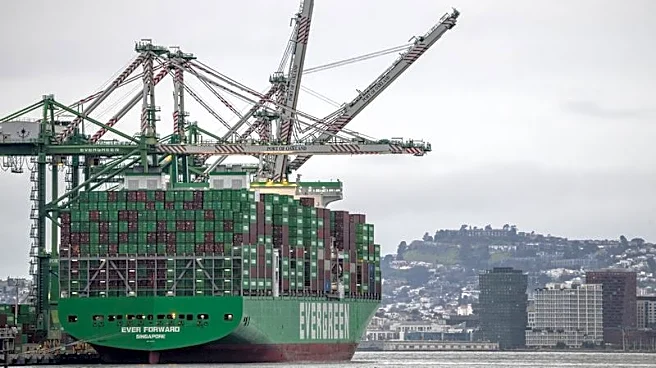
particularly the closure of the Strait of Hormuz. The RaboResearch arm of the food and agribusiness bank anticipates that US food inflation will range from 4% to 6% by the end of 2026, with a slight moderation to 3% to 5% for the full year of 2027. The report highlights that elevated and volatile energy prices are causing inflationary pressures throughout the food system, affecting everything from fertilizer manufacturing to transportation and packaging. This situation is distinct from the post-pandemic inflation surge of 2021-22, as it is not driven by demand but rather by cost-push factors that could impact food and beverage companies' margins.
Why It's Important?
The projected rise in food inflation has significant implications for the US economy and consumers. As energy prices continue to climb due to geopolitical instability, the entire food supply chain faces increased costs, which could lead to higher prices for consumers. This situation is likely to affect lower- and middle-income households more severely, as they may have to adjust their spending habits by trading down or seeking value options. The report suggests that the inflationary pressures will not only impact food prices but also the broader economic landscape, potentially leading to a more bifurcated consumption trend. This could result in volume softness in mainstream and discretionary categories, affecting brand owners and retailers.
What's Next?
As the geopolitical situation evolves, the US food system may continue to experience inflationary pressures. Businesses and consumers will need to adapt to the changing economic environment, with potential shifts in consumer behavior and spending patterns. Companies may need to adjust their product offerings and pricing strategies to accommodate the new cost structures. Additionally, policymakers may need to consider measures to mitigate the impact of rising food prices on vulnerable populations. The ongoing geopolitical tensions and energy market dynamics will likely play a crucial role in shaping the future of US food inflation.