


What's Happening?
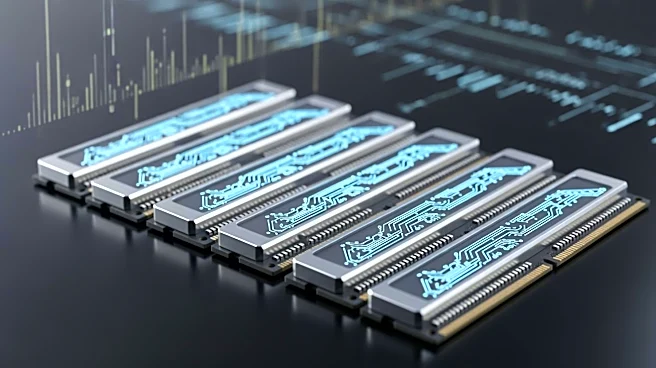
Market analyst Trendforce reports a significant drop in DDR5 RAM kit prices in the U.S., Europe, and China. This price correction is attributed to recent market dynamics, including spending cuts at OpenAI and debates over Google's TurboQuant. Despite
the retail price drop, contract memory prices remain stable, indicating a consumer-driven adjustment rather than a structural demand change. The report suggests that while some DDR5 kits are cheaper than their peak prices, the overall trend is not yet clear, with contract prices holding firm and server-side demand remaining steady.
Why It's Important?
The decline in DDR5 RAM prices could have significant implications for consumers and the tech industry. Lower prices may make high-performance computing more accessible to a broader audience, potentially boosting sales of PCs and gaming systems. However, the stability of contract prices suggests that the industry is not experiencing a fundamental shift in demand. This situation highlights the complex interplay between consumer behavior and industry supply chains, with potential impacts on manufacturers and retailers. The outcome of this price adjustment could influence future pricing strategies and market dynamics in the tech sector.
What's Next?
The future of DDR5 RAM pricing will likely depend on broader economic factors and technological advancements. If the AI industry continues to grow, demand for memory could increase, potentially stabilizing or reversing the current price trend. Conversely, if the AI sector faces setbacks, memory prices might continue to decline. Industry stakeholders will need to monitor these developments closely, as they could affect production plans and investment decisions. Additionally, consumer response to the current price changes will be crucial in determining the long-term impact on the market.