
What's Happening?
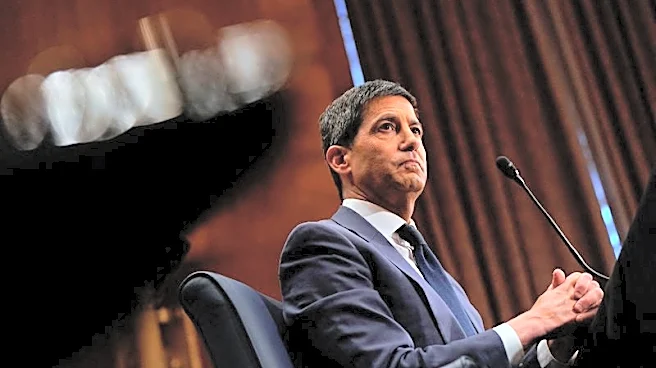
Neel Kashkari, President of the Federal Reserve Bank of Minneapolis, has expressed his dissent against the Federal Open Market Committee's (FOMC) recent policy statement. While he supported the decision
to hold the federal funds rate steady, he opposed the inclusion of language suggesting a bias towards future rate cuts. Kashkari argues that given the current economic and geopolitical uncertainties, it is inappropriate to provide forward guidance indicating a likely rate cut. He believes the FOMC should signal that the next rate change could be either a cut or a hike, depending on economic developments.
Why It's Important?
Kashkari's dissent highlights the growing debate within the Federal Reserve regarding the appropriate direction for monetary policy amid economic uncertainties. His stance reflects concerns about the potential impact of forward guidance on financial conditions and the broader economy. By advocating for a more flexible policy outlook, Kashkari emphasizes the need for the Fed to remain adaptable in response to evolving economic conditions. This dissent also underscores the challenges the Fed faces in balancing its dual mandate of price stability and maximum employment, particularly in the context of ongoing geopolitical tensions.
What's Next?
The FOMC will continue to monitor economic indicators and geopolitical developments to inform its future policy decisions. Kashkari's call for a more flexible approach may influence upcoming discussions within the committee, potentially leading to adjustments in the Fed's communication strategy. As the economic landscape evolves, the Fed will need to carefully consider the timing and nature of any future rate changes to ensure they align with its policy objectives. The ongoing debate within the Fed may also impact market expectations and investor sentiment, as stakeholders seek clarity on the central bank's policy direction.