


What's Happening?
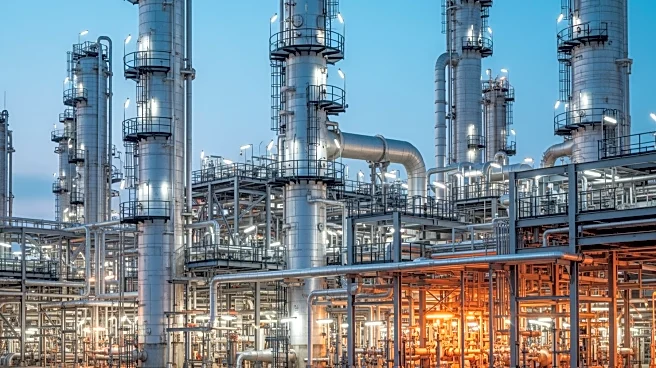
The global petrochemical market is projected to exceed $1.25 trillion by 2036, driven by a compound annual growth rate (CAGR) of approximately 6.0%. The industry is transitioning from traditional commodity-heavy production to high-value specialty chemicals, digitalized operations, and advanced circular economy frameworks. This shift is marked by a strategic focus on localized supply chains, particularly in the Asia-Pacific region, and the integration of artificial intelligence (AI) to enhance production efficiency. Major players such as BASF SE, SABIC, Dow, ExxonMobil Chemical, and Reliance Industries Limited are leading this transformation through aggressive research and development and portfolio rebalancing. The market's growth is fueled by the demand
for primary olefins and aromatics, which are essential for sectors like packaging, automotive, construction, and healthcare.
Why It's Important?
The transformation of the petrochemical industry is significant for several reasons. The shift towards specialty chemicals and sustainable practices aligns with global trends towards environmental responsibility and efficiency. The increased demand for specialized polymers, driven by the electrification and energy storage boom, highlights the industry's role in supporting the transition to electric vehicles and renewable energy. Additionally, the use of AI in optimizing production processes represents a technological advancement that could set new standards for operational excellence. This evolution is crucial for maintaining competitiveness in a market facing challenges such as fluctuating feedstock prices and stringent environmental regulations. The industry's ability to innovate and adapt will be key to sustaining profitability and meeting the growing demand for sustainable materials.
What's Next?
The petrochemical industry is expected to continue its strategic shift towards sustainability and innovation. The focus on vertical integration, particularly in Asia-Pacific, will likely strengthen the region's dominance in the market. As new refinery-integrated petrochemical complexes come online in India and China, these countries aim to reduce import dependence and capture the full value chain. In Europe, producers are investing in chemical recycling technologies and high-margin specialty materials to remain competitive despite higher energy costs. The industry's future will be shaped by its ability to balance capacity expansion with environmental regulations and consumer preferences for sustainable products.