
What's Happening?
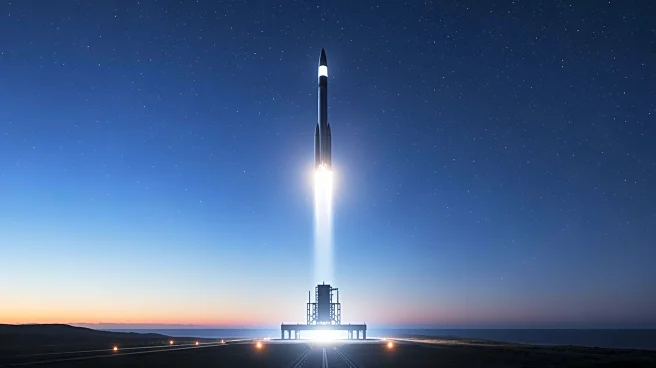
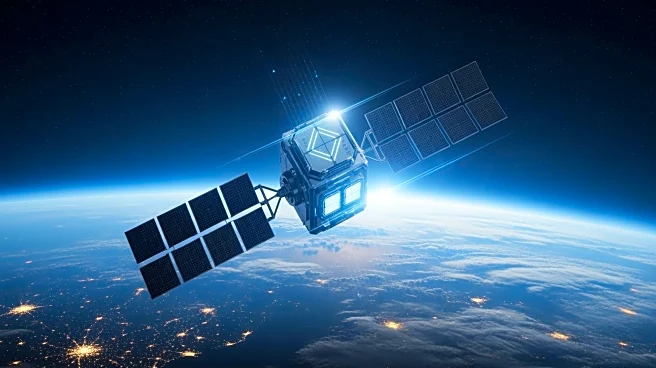
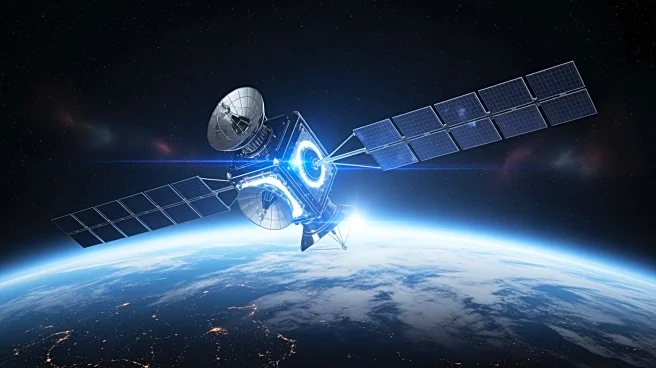
K2 Space, a company founded by former SpaceX engineers Karan and Neel Kunjur, is set to launch its first high-powered satellite, Gravitas, aboard a SpaceX Falcon 9 rocket. The satellite, weighing two metric tons and featuring a 40-meter wingspan when
its solar panels are deployed, is designed to produce 20 kW of electricity. This power will support payloads such as sensors, transceivers, and computers, marking a significant step towards building data centers in orbit. The Gravitas mission will carry 12 undisclosed payload modules, including one for the Department of Defense, and will test a 20 kW electric thruster, potentially the most powerful ever flown in space. K2 Space has raised $450 million and was valued at $3 billion in December 2025. The company plans to launch 11 more satellites over the next two years, aiming to establish a network of high-powered space vehicles by 2028.
Why It's Important?
The launch of Gravitas represents a significant advancement in the development of high-powered satellites, which are crucial for the future of space-based data centers and communications networks. The ability to generate more power in orbit can enhance data processing capabilities and improve communication networks by increasing throughput and reducing susceptibility to jamming. This development is particularly relevant as the demand for satellite-based services grows, driven by initiatives like Starlink, Amazon's LEO, and the Pentagon's missile defense plans. K2 Space's approach could lead to more cost-effective and powerful satellite solutions, potentially transforming the satellite industry and enabling new business models in space.
What's Next?
Following the launch of Gravitas, K2 Space will evaluate the mission's success based on the satellite's deployment, power generation, and thruster performance. The company plans to use the data collected to refine future satellite designs. With 11 more satellites scheduled for launch in the next two years, K2 aims to expand its capabilities and establish a commercial network of high-powered satellites. The company is also preparing for the potential operational availability of SpaceX's Starship and Blue Origin's New Glenn, which could significantly reduce launch costs and enable even larger satellite deployments.