







What's Happening?
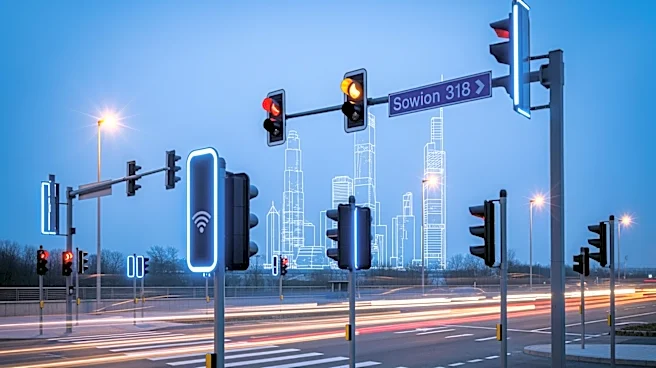
The trucking industry is increasingly turning to real-time routing and data-driven planning to address the challenges posed by traffic congestion. According to a report, congestion leads to significant fuel consumption and equipment wear, costing the industry billions
annually. The American Transportation Research Institute (ATRI) highlights that congestion results in the waste of over 6.4 billion gallons of diesel fuel each year, translating to $32.1 billion in costs. Additionally, congestion causes 1.2 billion hours of lost driver productivity, equivalent to removing 430,000 commercial truck drivers from the road for a year. This lost time increases labor costs and limits freight movement within hours-of-service constraints. To mitigate these issues, fleets are using AI and machine learning to analyze data and predict congestion patterns, allowing for more efficient routing and improved ETA forecasts. By adjusting delivery windows and utilizing telematics, fleets aim to reduce time lost to bottlenecks and optimize asset utilization.
Why It's Important?
The adoption of real-time routing and data-driven strategies is crucial for the trucking industry as it seeks to maintain efficiency and profitability in the face of rising congestion. The financial impact of congestion is substantial, affecting fuel costs, equipment wear, and labor expenses. By leveraging technology, fleets can better manage these costs and improve service reliability, which is vital for maintaining customer trust and competitiveness. The ability to predict and navigate congestion not only enhances operational efficiency but also addresses driver retention challenges by reducing stress and improving working conditions. As the industry adapts to these new strategies, it sets a precedent for other sectors facing similar logistical challenges.
What's Next?
Fleets are expected to continue investing in technology to further enhance their ability to manage congestion. This includes expanding the use of AI and machine learning for predictive analytics and exploring new telematics solutions for real-time traffic management. Collaboration with customers to optimize delivery schedules and pricing strategies will also be key in adapting to dynamic traffic conditions. As these technologies evolve, they may lead to broader changes in how the industry defines and measures efficiency, shifting the focus from distance to time as the primary metric of productivity.