






What's Happening?
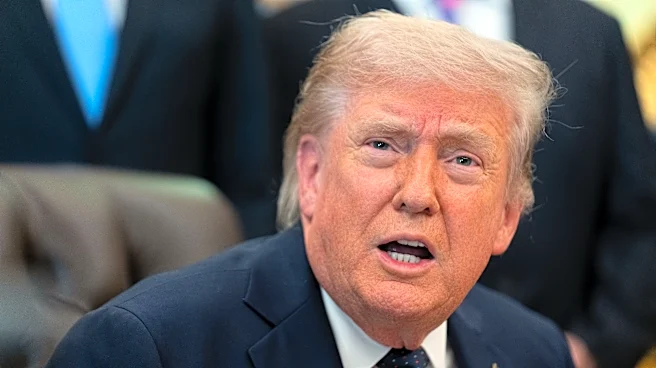
Detroit Axle, a Michigan-based auto parts manufacturer, is suing the White House following a Supreme Court ruling that President Trump lacked authority to impose certain tariffs. The lawsuit challenges the administration's use of the de minimis exemption,
which allows goods valued under $800 to be shipped duty-free. CEO Mike Musheinesh argues that this exemption undermines domestic manufacturers by allowing foreign competitors to bypass tariffs. The Supreme Court's decision did not address this exemption, prompting Detroit Axle to seek legal recourse.
Why It's Important?
This lawsuit highlights ongoing tensions between U.S. manufacturers and the federal government over trade policies. The outcome could affect how tariffs are applied and enforced, impacting domestic industries reliant on protection from foreign competition. A ruling in favor of Detroit Axle could lead to changes in tariff regulations, potentially benefiting U.S. manufacturers but also risking retaliatory measures from trade partners. The case underscores the complexities of trade policy and its implications for the U.S. economy.
What's Next?
The lawsuit will proceed through the legal system, with potential implications for U.S. trade policy depending on the outcome. If successful, Detroit Axle's case could prompt the administration to reconsider the de minimis exemption and its impact on domestic industries. The case may also influence future legal challenges to trade policies and could lead to broader discussions on tariff regulations and their enforcement.