




What's Happening?
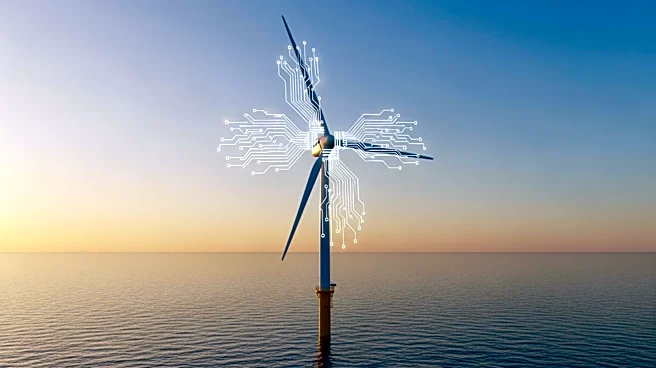
Aikido Technologies, a company led by San Francisco engineer Sam Kanner, is developing a novel approach to data center placement by integrating them into the hollow legs of floating wind turbines. This initiative aims to address the growing demand for
power and cooling in artificial intelligence workloads. The first prototype, a 100-kilowatt unit paired with a refurbished Vesta V-17 turbine, is set to launch off the coast of Norway by the end of 2026. The design utilizes the existing space within offshore wind platforms, where each of the three cylindrical legs of the semi-submersible platform can host a 4-megawatt, liquid-cooled data hall. The cooling system leverages the cold North Sea water to dissipate heat generated by the servers, potentially offering a cost-competitive alternative to traditional data centers.
Why It's Important?
This innovative approach could significantly impact the data center industry by providing a sustainable and efficient solution to the power and cooling challenges faced by AI workloads. By utilizing offshore wind turbines, Aikido Technologies aims to alleviate the pressure on congested power grids and water resources in traditional data center locations. The integration of data centers into wind turbines also aligns with global efforts to expand clean energy infrastructure, particularly in the North Sea, which is being developed as a major reservoir of renewable energy. If successful, this model could be replicated globally, transforming how and where data centers are built and operated.
What's Next?
The success of the prototype will be crucial in determining the feasibility of this approach. Aikido Technologies plans to monitor the cooling system's performance and the power stability through seasonal changes. If the prototype proves successful, a larger project, potentially reaching 15 to 18 megawatts, could be developed off the United Kingdom coast by 2028. The company will also need to address regulatory scrutiny regarding heat discharge into marine environments and ensure the physical security of the offshore installations, especially in light of recent geopolitical tensions affecting infrastructure in northern European waters.