






What's Happening?
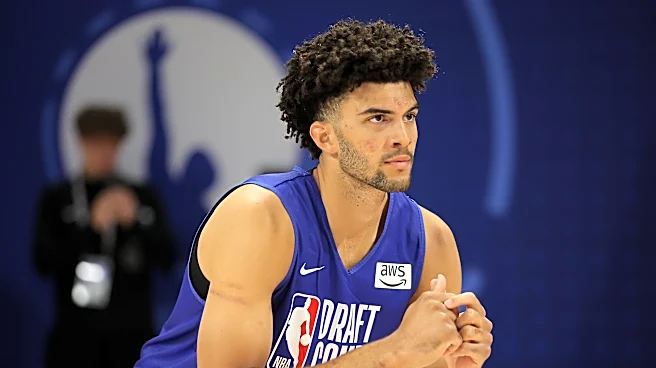
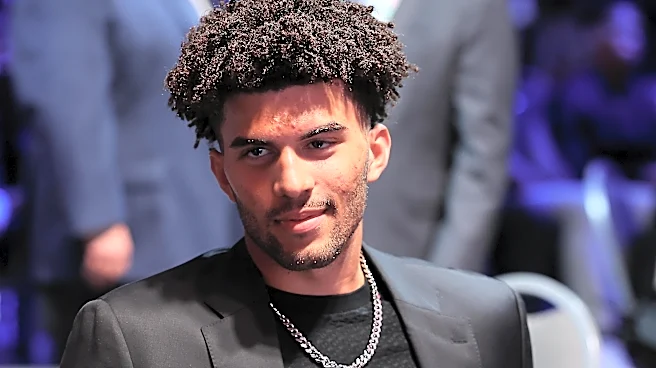
Isaiah Evans, a former Duke Blue Devils basketball player, has decided to remain in the 2026 NBA Draft, foregoing a potential return to college basketball. Evans, known for his shooting and defensive capabilities, made his decision public at the NBA Combine,
contrasting with other prospects who delayed their announcements. Despite the potential financial benefits of returning to college, where he could earn a substantial salary through NIL deals, Evans has chosen to pursue his professional career. He is projected to be selected late in the first round, with an expected first-year NBA salary between $2 and $4 million. This decision reflects a broader trend among college athletes who weigh the immediate financial gains of professional sports against lucrative college opportunities.
Why It's Important?
Evans' decision highlights the evolving landscape of college athletics, particularly with the introduction of Name, Image, and Likeness (NIL) deals. These agreements allow college athletes to earn significant income, sometimes rivaling or exceeding what they might earn in their initial professional years. For Evans, staying in the NBA Draft means potentially missing out on a higher salary in college, but it also underscores the allure of professional sports and the prestige associated with being an NBA player. This decision could influence other athletes facing similar choices, as they navigate the balance between immediate professional opportunities and lucrative college deals.
What's Next?
Evans will now focus on the upcoming NBA Draft, where he is expected to be selected between picks 20 and 30. His performance in the NBA will be closely watched, as he aims to establish himself as a reliable 3-and-D wing player. Meanwhile, college programs may continue to leverage NIL deals to retain top talent, potentially reshaping recruitment strategies and the dynamics of college basketball. As NIL contracts grow, more athletes may face similar decisions, impacting both college sports and the NBA.
Beyond the Headlines
The decision by Evans to remain in the NBA Draft despite potential financial gains in college raises questions about the long-term implications of NIL deals on college sports. As these contracts become more lucrative, they could alter the traditional path from college to professional sports, with athletes increasingly weighing the benefits of staying in college longer. This shift could impact the quality of college sports, as well as the strategies of professional teams in scouting and drafting players.