



What's Happening?
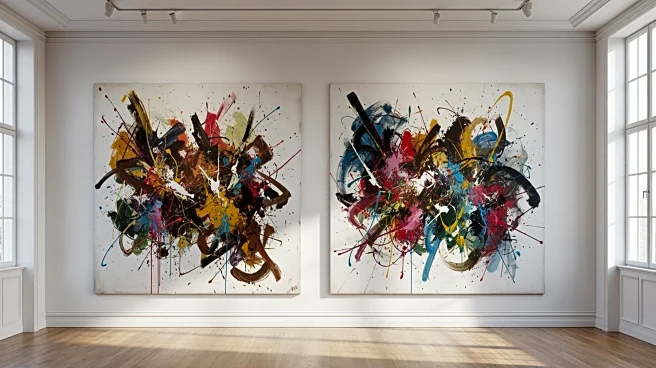
The Metropolitan Museum of Art in New York is set to host a major exhibition featuring the works of Abstract Expressionist artists Lee Krasner and Jackson Pollock. This exhibition, titled 'Krasner and Pollock: Past Continuous,' marks the first major presentation
dedicated to either artist in over two decades and the first joint show to cover the entirety of their careers. The exhibition will include more than 120 objects, showcasing paintings, works on paper, and ephemera from both artists. The show aims to highlight the equality and partnership between Krasner and Pollock, emphasizing their individual contributions to the art world. The exhibition is curated by David Breslin and Brinda Kumar, with assistance from CJ Salapare, and will run from October 4, 2026, to January 31, 2027.
Why It's Important?
This exhibition is significant as it seeks to reframe the narrative around Lee Krasner, who has often been overshadowed by her husband, Jackson Pollock. By presenting their works side by side, the Met aims to recognize Krasner's contributions to Abstract Expressionism and her influence on Pollock. The exhibition also provides an opportunity to explore the artistic dialogue between the two artists, who were both pivotal figures in the development of modern art. This event is expected to attract significant attention from art enthusiasts and scholars, offering a comprehensive view of their artistic legacies and the evolution of their styles.
What's Next?
Following the exhibition, there may be increased interest in Lee Krasner's work, potentially leading to more exhibitions and scholarly research focused on her contributions to art. The exhibition could also inspire a reevaluation of the roles of women in the art world, encouraging museums and galleries to highlight other female artists who have been historically overlooked. Additionally, the success of this exhibition might prompt other institutions to organize similar joint retrospectives, further exploring the dynamics between artist couples and their impact on art history.