


What's Happening?
According to Mordor Intelligence, the global organic fertilizers market is expected to grow from USD 12.02 billion in 2026 to USD 18.65 billion by 2031, with a compound annual growth rate (CAGR) of 9.2%. This growth is driven by stricter residue regulations,
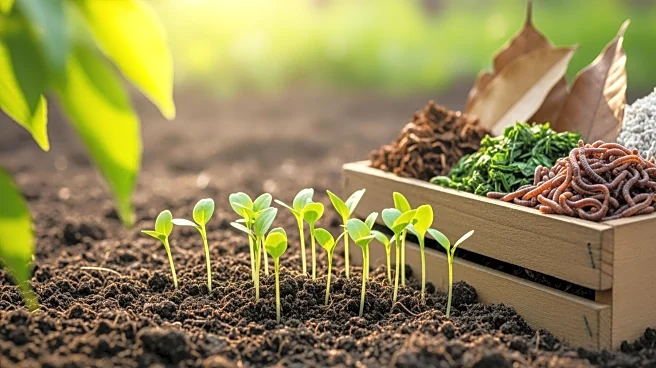
expanding organic farmland, and retailer mandates for certified organic inputs. Europe currently holds the largest market share, while North America is the fastest-growing region due to soil-health benchmarks in crop insurance and conservation programs. The market is shifting from synthetic fertilizers to nutrient-recycling alternatives like compost and manure-based blends.
Why It's Important?
The expansion of the organic fertilizers market reflects a broader shift towards sustainable agriculture. As consumers demand chemical-free produce, and regulations tighten on synthetic fertilizers, the market for organic alternatives is poised for significant growth. This trend supports environmental sustainability by reducing chemical runoff and improving soil health. For farmers, transitioning to organic fertilizers can offer economic benefits through premium pricing for organic produce and compliance with conservation incentives. The market's growth also indicates a potential increase in job opportunities within the organic agriculture sector.
Beyond the Headlines
The growth of the organic fertilizers market highlights the increasing importance of sustainable farming practices. As regulatory frameworks evolve, farmers may face challenges in transitioning to organic methods, including the need for new equipment and training. However, government incentives and financial assistance can mitigate these challenges, encouraging more farmers to adopt organic practices. The market's expansion also underscores the role of technology in agriculture, with advancements in quality assurance and traceability systems enhancing the reliability of organic fertilizers.