

What's Happening?
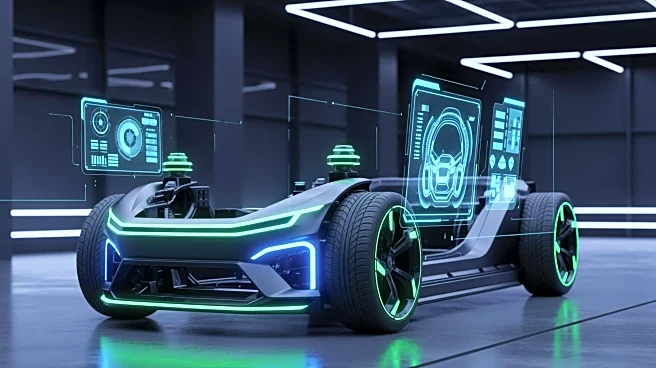
Uber has announced a partnership with Rivian, an electric vehicle manufacturer, to introduce up to 50,000 self-driving R2 vehicles by 2031. This collaboration aims to expand Uber's presence in the autonomous vehicle market, with the initial deployment
planned for San Francisco and Miami in 2028. The partnership will see Uber investing up to $1.25 billion in Rivian, contingent on achieving certain autonomous performance milestones. Rivian's R2, a lower-priced SUV, is expected to boost sales as federal support for electric vehicles declines. This move is part of Uber's broader strategy to integrate autonomous solutions into its ride-hailing services, following similar partnerships with Volkswagen and Waymo.
Why It's Important?
The partnership between Uber and Rivian represents a significant step in the evolution of autonomous transportation. By integrating self-driving vehicles into its fleet, Uber aims to reduce operational costs and enhance service efficiency. This move could potentially reshape urban transportation, offering safer and more convenient travel options. For Rivian, the partnership provides a platform to showcase its autonomous technology and expand its market presence. The collaboration also highlights the growing trend of tech companies investing in autonomous vehicle technology, which could lead to increased competition and innovation in the sector.
What's Next?
The first phase of the partnership will involve Uber purchasing 10,000 autonomous R2 vehicles, with the option to acquire an additional 40,000 by 2030. The rollout will begin in select U.S. cities, with plans to expand to Canada and Europe. As the partnership progresses, both companies will focus on achieving the necessary technological milestones to ensure the safe and efficient operation of the self-driving fleet. Stakeholders, including city planners and regulatory bodies, will likely play a crucial role in facilitating the integration of autonomous vehicles into existing transportation infrastructures.