

What's Happening?
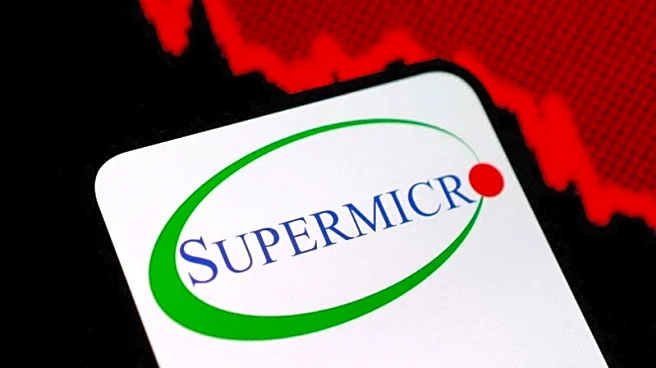
Super Micro's stock experienced a significant drop after U.S. prosecutors charged three individuals associated with the company, including its co-founder, with smuggling AI technology to China. The Justice Department accused Yih-Shyan Liaw, Ruei-Tsang
Chang, and Ting-Wei Sun of rerouting U.S.-made servers through Taiwan to Southeast Asia, where they were repackaged and smuggled into China. The alleged scheme involved at least $2.5 billion in AI technology, with over half a billion dollars worth shipped between April and mid-May 2025. Super Micro, a major AI server builder using Nvidia's chips, was not named as a defendant in the case and has cooperated with investigators. The company has placed the implicated employees on leave and severed ties with the contractor involved.
Why It's Important?
The charges against Super Micro's executives highlight the ongoing tensions between the U.S. and China over technology transfer and intellectual property. The U.S. has imposed strict export controls on AI technology to prevent its military use by China. This incident could lead to increased scrutiny and regulatory challenges for companies involved in the tech supply chain. The stock market reaction underscores investor concerns about potential reputational damage and operational risks for Super Micro. Additionally, competitors like Dell may benefit as customers reassess their supplier relationships, potentially shifting business away from Super Micro.
What's Next?
The legal proceedings against the individuals involved will likely unfold over the coming months, with potential implications for Super Micro's business operations and market position. The company may face further investigations and audits, which could lead to additional costs and impact its reputation. Customers might seek alternative suppliers to avoid potential scrutiny, and Nvidia may favor other server makers. The broader tech industry will be watching closely for any changes in U.S. export control policies or enforcement actions that could affect international trade and technology partnerships.