




What's Happening?
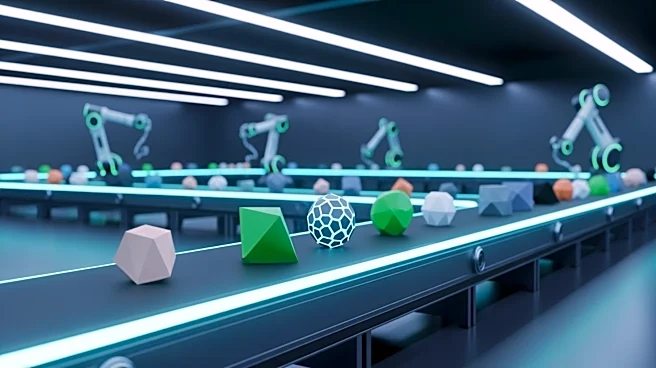
The industrial machinery sector is undergoing significant transformation driven by technological advancements such as artificial intelligence (AI), smart manufacturing practices, and autonomous robots. These innovations are reshaping how manufacturers
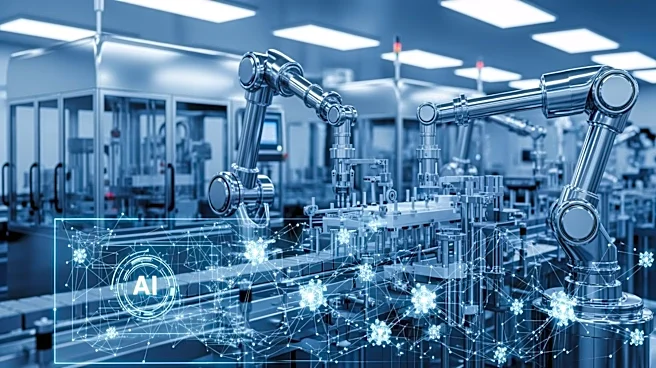
design and build equipment, with a focus on modular designs that allow for faster assembly and customization. The sector is also responding to regulatory and market pressures to operate more sustainably by adopting energy-efficient systems and recyclable components. The integration of AI is particularly noteworthy, as it enhances equipment assembly, maintenance, and quality control, while also enabling predictive maintenance strategies to minimize downtime and costs.
Why It's Important?
The evolution of the industrial machinery sector is crucial for maintaining competitiveness in a rapidly changing global market. By adopting advanced technologies, manufacturers can improve efficiency, reduce waste, and meet increasing demands for sustainability. This transformation is also addressing the industry's talent shortage by requiring a workforce skilled in AI, data analytics, and smart manufacturing technologies. The shift towards reshoring production to domestic markets is another significant trend, driven by the need for more predictable supply chains and reduced reliance on foreign manufacturing. These changes are expected to enhance the sector's growth potential, with the market projected to reach $1.3 trillion by 2031.
What's Next?
As the industrial machinery sector continues to evolve, manufacturers are likely to increase investments in AI and smart manufacturing technologies to further enhance productivity and efficiency. The focus on sustainability will also intensify, with companies seeking to align with regulatory requirements and public expectations. The trend of reshoring is expected to gain momentum, supported by government incentives and the need for more resilient supply chains. Additionally, the sector will continue to address the skills gap by upskilling existing employees and attracting new talent proficient in emerging technologies.
Beyond the Headlines
The shift towards modular designs and smart manufacturing not only improves operational efficiency but also allows for greater customization to meet diverse customer needs. This flexibility is particularly important in sectors like automotive and aerospace, where rapid adaptation to new models is essential. The integration of AI and robotics is also transforming workplace dynamics, as collaborative robots (cobots) work alongside human employees to enhance productivity and safety. These developments are likely to redefine manufacturing processes and set new standards for innovation and sustainability in the industry.