


What's Happening?
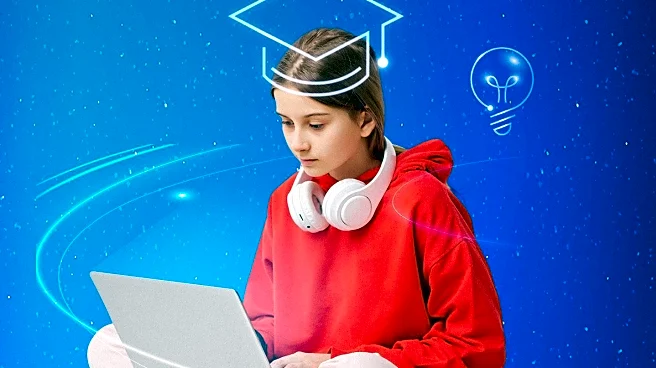
Artificial intelligence (AI) is increasingly being integrated into educational tools aimed at supporting social-emotional learning (SEL) among students. At a recent conference by the Collaborative for Academic, Social, and Emotional Learning (CASEL),
experts discussed the potential of AI to aid in developing students' interpersonal skills. AI-powered products are being designed to help students practice social-emotional skills in a low-stakes environment, such as rehearsing difficult conversations or job interviews. However, concerns have been raised about the impact of AI on students' ability to think critically and distinguish between simulated empathy from chatbots and genuine human understanding. Privacy issues are also a significant concern, with questions about data usage and storage being highlighted by experts like Justin Long from Instructure.
Why It's Important?
The integration of AI in education could significantly impact how social-emotional skills are taught and developed in students. While AI offers opportunities to expand access to SEL resources and reduce barriers, it also poses risks related to privacy and the potential erosion of critical thinking skills. The American Psychological Association has issued advisories about the challenges adolescents face in differentiating between AI-generated empathy and real human interactions. As AI becomes more prevalent in educational settings, it is crucial to ensure that these tools are purpose-built and ethically deployed to support, rather than replace, human educators and mental health professionals.
What's Next?
Educators and policymakers are encouraged to proactively shape AI policies that focus on SEL. This involves setting clear goals for what AI and SEL should achieve and evaluating these technologies against those standards. The ongoing dialogue among educators, researchers, and policymakers will be essential in navigating the ethical and practical challenges posed by AI in education. As AI tools continue to evolve, stakeholders must anticipate and address the potential impacts on students' social-emotional development and privacy.
Beyond the Headlines
The broader implications of AI in education extend beyond immediate classroom applications. The technology's influence on social-emotional learning could reshape how young people form relationships and perceive themselves in a tech-driven world. Additionally, the ethical deployment of AI in education requires careful consideration of data privacy and the safeguarding of sensitive information. As AI tools become more integrated into educational systems, ongoing research and dialogue will be necessary to ensure that these technologies enhance, rather than hinder, students' social-emotional growth.