





What's Happening?
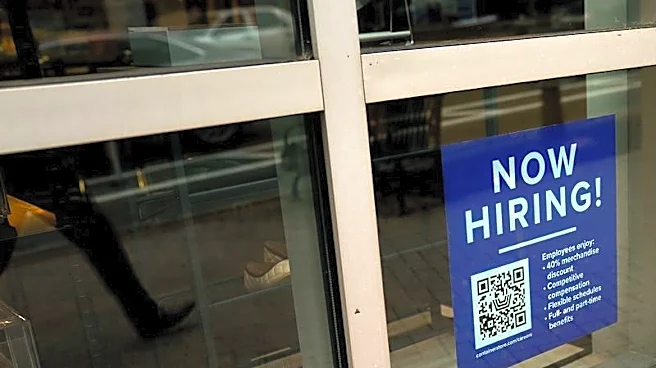
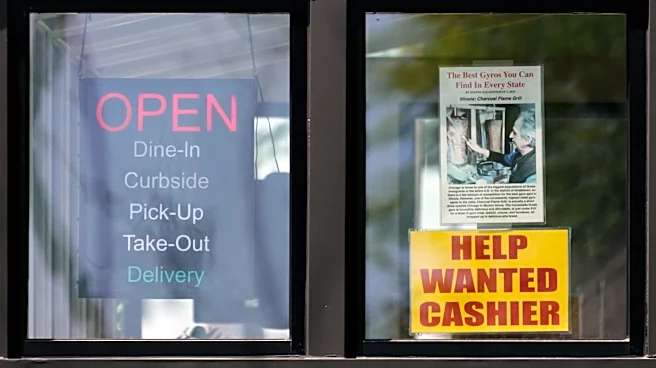
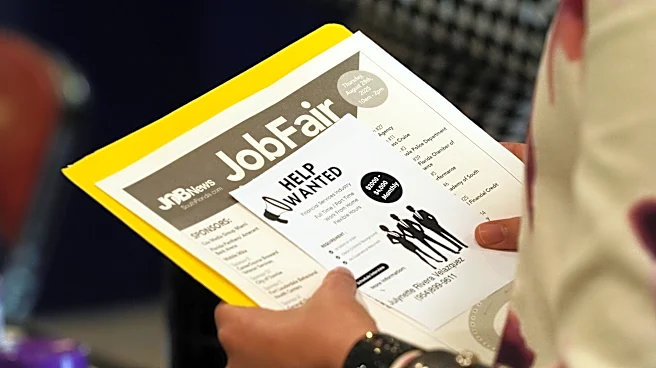
The Bureau of Labor Statistics reported that the U.S. economy added 172,000 jobs in May 2026, with significant gains in the hospitality, government, and healthcare sectors. The leisure and hospitality sector led the growth, adding 70,000 jobs, driven
by restaurants and bars. Government employment increased by 55,000, primarily in local government roles outside education. Healthcare continued its steady growth, adding 35,000 jobs, with ambulatory services and hospitals contributing significantly. Conversely, the financial sector experienced a contraction, losing 22,000 jobs, with declines concentrated in insurance and commercial banking. The unemployment rate remained steady at 4.3%, and wage growth was modest.
Why It's Important?
The job gains in service-oriented sectors like hospitality and healthcare reflect ongoing consumer demand and demographic shifts. However, the financial sector's job losses indicate potential vulnerabilities in the economy. The steady unemployment rate and modest wage growth suggest that while job creation is occurring, it may not be translating into significant economic benefits for workers. The Trump administration faces a complex economic landscape, with geopolitical tensions and domestic policy shifts influencing economic stability. The Federal Reserve's focus on inflation control may impact future interest rate decisions, affecting economic growth.
What's Next?
The Federal Reserve is likely to maintain its focus on inflation control, with upcoming inflation data influencing its policy decisions. The Trump administration may need to address economic uncertainties, including geopolitical tensions and domestic policy challenges. Businesses and policymakers will need to navigate these complexities to ensure sustained economic growth and stability.