





What's Happening?
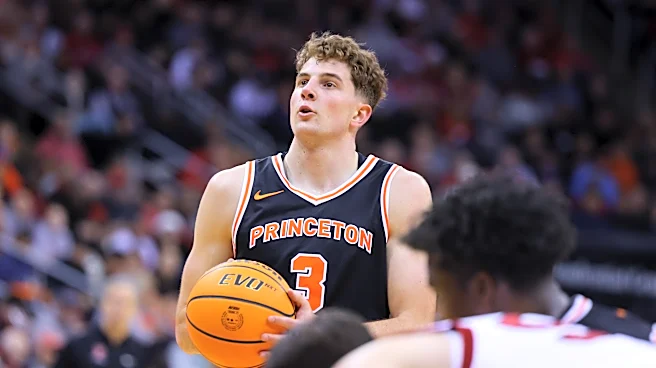
The North Carolina Tar Heels basketball team is undergoing significant changes under the leadership of new head coach Michael Malone. Malone, who took over the program amidst a challenging offseason, has successfully recruited a competitive roster, including
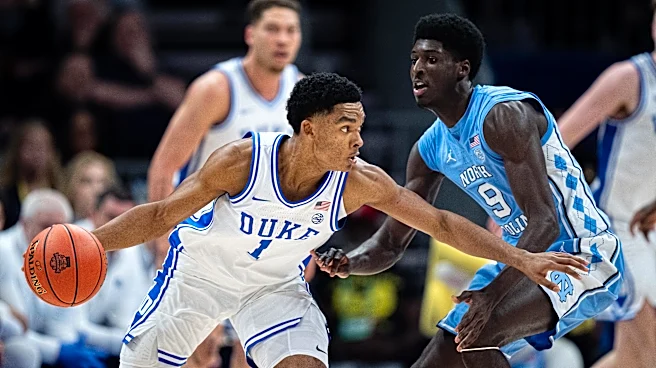
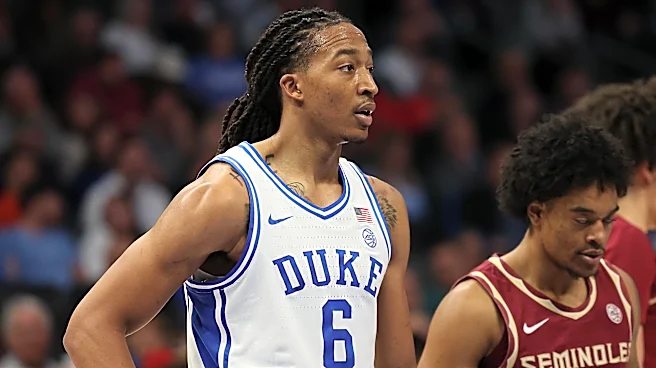
notable players like Terrence Brown and Matt Able. Despite initial concerns about his lack of experience in college recruitment, Malone has demonstrated his ability to attract talent that fits his system. His approach emphasizes toughness, self-motivation, and basketball IQ, qualities he believes are essential for success. The team is now poised to compete in the Atlantic Coast Conference (ACC) against strong rivals such as Duke and Louisville.
Why It's Important?
The transformation of the North Carolina Tar Heels under Michael Malone's leadership is significant for several reasons. Firstly, it highlights the potential for a successful transition from professional to college coaching, as Malone brings NBA-level strategies to the collegiate level. This shift could influence other programs to consider similar hires. Additionally, the Tar Heels' ability to attract top talent and compete in the ACC could impact the conference's dynamics, potentially altering the balance of power. For the players, Malone's NBA experience offers a unique opportunity to develop skills that are directly applicable to professional basketball, enhancing their prospects for future careers.
What's Next?
As the Tar Heels prepare for the upcoming season, the focus will be on building team chemistry and establishing a consistent rotation. The success of Malone's recruitment strategy will be tested in competitive play, and the team's performance could influence future recruitment efforts. Stakeholders, including fans and alumni, will be watching closely to see if the program can return to its former glory. The team's progress will also be a point of interest for other college programs considering similar coaching hires.
Beyond the Headlines
The changes at North Carolina could have broader implications for college basketball, particularly in how programs approach coaching hires and recruitment. Malone's success could encourage other schools to look beyond traditional college coaching candidates, potentially leading to a more diverse range of coaching styles and strategies in the NCAA. Additionally, the emphasis on player development and professional readiness may shift the focus of college programs from purely athletic success to preparing athletes for life beyond college sports.