

What's Happening?
Researchers at four Fraunhofer institutes in Germany have developed a new manufacturing process that uses lasers to seal paper packaging, eliminating the need for glue or plastic additives. This innovation, part of the Papure project, aims to improve
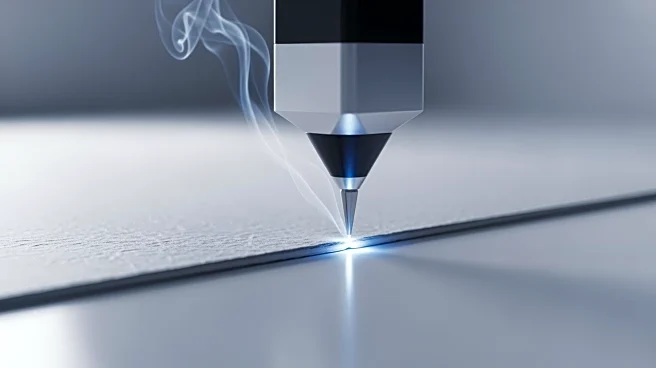
the recyclability of paper by avoiding contamination from adhesives. The process involves analyzing the chemical composition of paper types to determine their suitability for laser sealing. A carbon monoxide laser is then used to heat the paper's surface, creating a natural glue from the paper's own components. The prototype manufacturing unit is expected to produce 10 packages per minute by September.
Why It's Important?
This development is significant as it addresses the environmental challenges associated with traditional paper packaging, which often involves adhesives that complicate recycling. By eliminating these additives, the new process could enhance the quality of recycled paper and reduce waste. This innovation could have a substantial impact on industries reliant on paper packaging, promoting more sustainable practices and potentially influencing regulatory standards for packaging materials. Companies that adopt this technology may benefit from improved sustainability credentials and reduced environmental impact.
What's Next?
The researchers are working to refine the laser sealing process, including optimizing laser intensity and paper seam design to maximize bond strength. They aim to streamline the design of the laser and sealing modules and integrate systems to assess seal quality. By the end of September, the goal is for the pilot machine to produce 10 packages per minute. If successful, this technology could be scaled up for broader industrial use, potentially transforming packaging practices across various sectors.