








What's Happening?
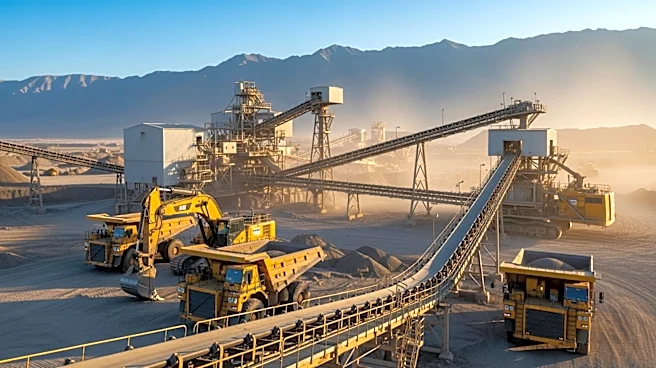
Montero Mining and Exploration Ltd. has announced the commencement of its initial first-pass drill program at the Elvira Gold Project in Chile. The project is located within the Maricunga Belt, a region known for its mineral wealth. The drill program follows
an integrated review of geological, geochemical, and geophysical data, aiming to explore a large hydrothermal system. The program will test high-priority targets, including a core chargeability/porphyry copper target and a high-sulphidation gold system. The initial phase involves four drill holes totaling approximately 2,025 meters. The program is designed to assess both the upper gold-bearing structures and deeper sulphide-rich porphyry vectors. Montero's CEO, Dr. Tony Harwood, emphasized the program's potential to enhance understanding of the mineral system and identify significant mineralization.
Why It's Important?
The Elvira Gold Project represents a significant opportunity for Montero Mining to expand its resource base and potentially discover new mineral deposits. The Maricunga Belt is a prolific mining region, and successful exploration could lead to substantial economic benefits for the company and the local economy. The drill program's focus on both gold and copper targets aligns with global demand for these metals, driven by their use in technology and renewable energy sectors. The project's success could attract further investment and development in the region, contributing to Chile's mining industry, which is a major component of its economy.
What's Next?
As the drill program progresses, Montero will analyze the geological, alteration, and mineralization data obtained from the initial drill holes. This information will guide the prioritization of subsequent drilling efforts. The company plans to use portable XRF analysis for rapid geochemical assessments, which will aid in real-time decision-making. Depending on the results, Montero may expand the drilling program to further explore the mineral system. The outcomes of this exploration could lead to resource estimation and potential development plans, contingent on the discovery of economically viable mineralization.