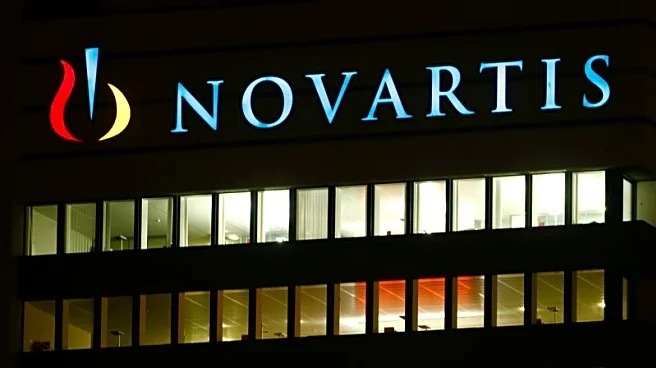




What's Happening?
Novartis has announced a significant acquisition of Pikavation Therapeutics, a subsidiary of Synnovation Therapeutics, for up to $3 billion. This acquisition is aimed at expanding Novartis's cancer treatment pipeline, particularly focusing on PI3Kα inhibitor
programs. Pikavation's leading program, SNV4818, is a pan-mutant selective PI3Kα inhibitor currently in early-stage clinical trials for treating hormone receptor-positive/human epidermal growth factor receptor 2-negative (HR+/HER2-) metastatic breast cancer and other solid tumors. The drug is designed to target mutated PI3Kα enzymes in cancer cells while sparing healthy cells, potentially reducing side effects and improving treatment efficacy. Novartis plans to further develop and commercialize SNV4818, with the transaction expected to close in the first half of 2026, pending regulatory approvals.
Why It's Important?
This acquisition underscores Novartis's commitment to advancing precision medicine in oncology. By focusing on targeted therapies that address specific genetic mutations, Novartis aims to improve treatment outcomes for cancer patients, particularly those with HR+/HER2- breast cancer. The deal highlights the growing trend in the pharmaceutical industry towards personalized medicine, which seeks to tailor treatments based on individual genetic profiles. This approach not only promises better efficacy but also aims to minimize adverse effects, thereby enhancing patient quality of life. The acquisition also positions Novartis to potentially capture a larger share of the oncology market, which is increasingly competitive and innovation-driven.
What's Next?
Following the acquisition, Novartis will oversee the development and commercialization of SNV4818 and other PI3Kα inhibitor programs. The ongoing clinical trials for SNV4818, including its combination with other therapies, will continue, with primary completion expected by April 2027. The success of these trials could lead to new treatment protocols for HR+/HER2- breast cancer, potentially setting new standards in cancer care. Additionally, the acquisition may prompt other pharmaceutical companies to pursue similar strategies, further accelerating the shift towards precision medicine in oncology.