




What's Happening?
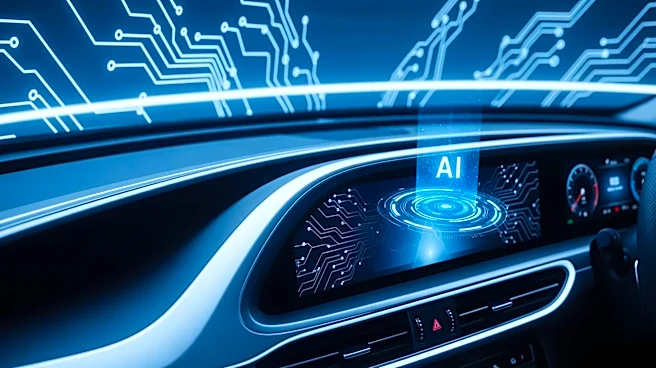
General Motors (GM) is advancing its autonomous driving technology by incorporating human emotion data into its research and development processes. At its headquarters in Michigan, GM is using simulations to mimic human driving experiences, collecting
data on drivers' stress levels through sensors that monitor eye movements, heartbeats, and perspiration. This data is analyzed using artificial intelligence to improve the company's Super Cruise system, ensuring it can handle a wide range of driving scenarios. Additionally, GM is developing cost-effective Lithium Manganese-Rich (LMR) batteries that use fewer rare minerals, aiming to reduce production costs and environmental impact. The company plans to introduce hands-off, eyes-off driving technology in 2028 with the all-electric Cadillac Escalade IQ.
Why It's Important?
GM's integration of human emotion data into its autonomous vehicle technology represents a significant step forward in the development of self-driving cars. By understanding and responding to human stress indicators, GM aims to create a safer and more reliable autonomous driving experience. This approach could set a new standard in the automotive industry, influencing how other companies develop their self-driving technologies. The introduction of cost-effective LMR batteries also highlights GM's commitment to sustainability and affordability, potentially making electric vehicles more accessible to a broader audience. These advancements could strengthen GM's position in the competitive automotive market, particularly as demand for electric and autonomous vehicles continues to grow.
What's Next?
GM plans to debut its hands-off, eyes-off driving technology in 2028, starting with the Cadillac Escalade IQ. As the company continues to refine its autonomous systems, it is likely to conduct further testing and data collection to ensure the technology meets safety and performance standards. The success of this initiative could prompt other automakers to adopt similar strategies, potentially accelerating the development of autonomous vehicles across the industry. Additionally, GM's focus on reducing battery costs and reliance on rare minerals may influence broader industry trends towards more sustainable and cost-effective electric vehicle production.