






What's Happening?
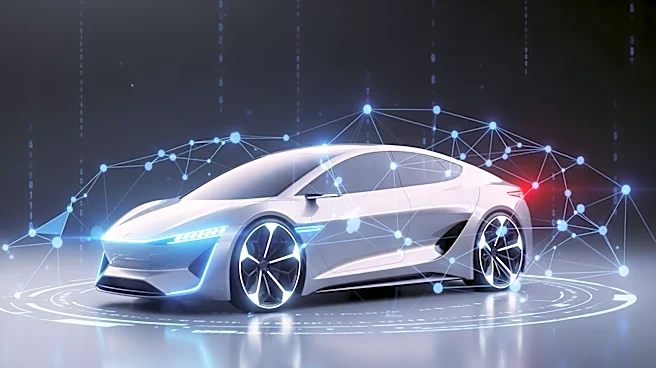
Uber has announced strategic partnerships with companies such as Zoox, Wayve-Nissan, and Rivian, as part of its ambition to become a leading aggregator in the robotaxi market. This move is part of a broader trend in the autonomous vehicle (AV) sector,
where investment is increasingly concentrated among a few key players. According to KPMG's Hugh Nguyen, the focus is shifting towards vertically integrated operators and aggregator platforms, like ride-hailing companies, as investors seek to minimize risks associated with spreading capital across numerous startups. This year, the AV industry has seen significant venture capital funding, with Alphabet's Waymo leading the charge by raising $16 billion. The concentration of funding reflects a maturing industry, with fewer competitors receiving the majority of investment.
Why It's Important?
The concentration of investment in the AV sector signifies a pivotal shift in the industry, highlighting the maturation and consolidation of key players. For Uber, these partnerships could position the company as a dominant force in the emerging robotaxi market, potentially reshaping urban transportation. The focus on a few major players suggests that investors are prioritizing stability and proven capabilities over speculative ventures. This could lead to accelerated development and deployment of autonomous technologies, impacting urban mobility, regulatory frameworks, and the competitive landscape of the transportation industry. Companies that successfully integrate and deploy these technologies stand to gain significant market share and influence.
What's Next?
As Uber and its partners advance their robotaxi initiatives, regulatory challenges and technological hurdles remain. The success of these partnerships will depend on navigating these complexities and achieving operational efficiency. Stakeholders, including policymakers and urban planners, will need to address the implications of widespread autonomous vehicle deployment, such as infrastructure adaptation and public safety. The industry may also see further consolidation as companies strive to enhance their technological capabilities and market reach. The outcome of these developments could redefine transportation norms and influence future investment strategies in the AV sector.