



What's Happening?
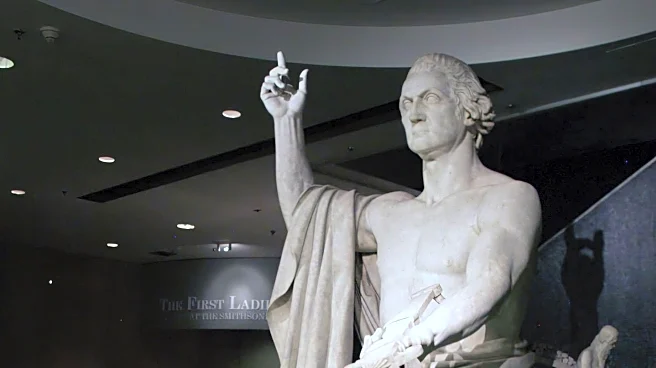
As the U.S. commemorates the 250th anniversary of the Declaration of Independence, reflections on George Washington's leadership offer insights into navigating civic challenges. Washington's example of courage, moderation, and civic charity is highlighted as a model for addressing contemporary issues of political division and violence. The article discusses the impact of recent events, such as the assassination of Charlie Kirk, on public discourse and the importance of fostering open dialogue. Washington's commitment to constitutional fidelity and civil discourse is presented as a guiding principle for educators and students in promoting respectful disagreement and civic engagement.
Why It's Important?
Washington's legacy serves as a reminder of the foundational
values that underpin American democracy. His emphasis on constitutional adherence and civil discourse is particularly relevant in today's polarized political climate. The article underscores the role of educators in cultivating a culture of respectful dialogue and critical thinking among students. By drawing on historical examples, it encourages a deeper understanding of civic responsibilities and the importance of maintaining a shared commitment to democratic principles. This perspective is vital for fostering a more informed and engaged citizenry capable of addressing complex societal challenges.
Beyond the Headlines
The discussion of Washington's legacy invites broader reflections on the role of historical figures in shaping contemporary civic values. It highlights the enduring relevance of foundational principles in guiding public discourse and policy decisions. The article also raises questions about the balance between free expression and social cohesion, particularly in educational settings. By promoting a nuanced understanding of civic engagement, it encourages a more thoughtful approach to navigating political differences and fostering a more inclusive and resilient democratic society.