






What's Happening?
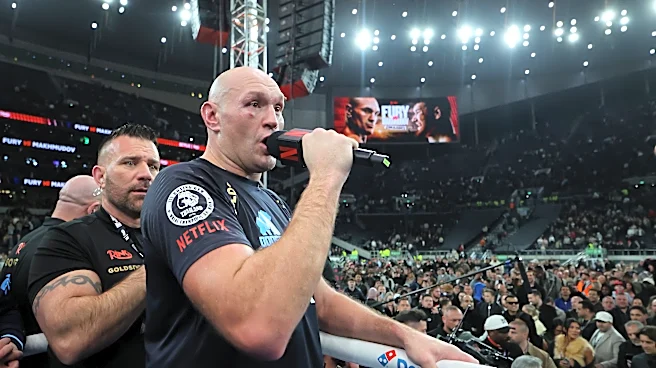
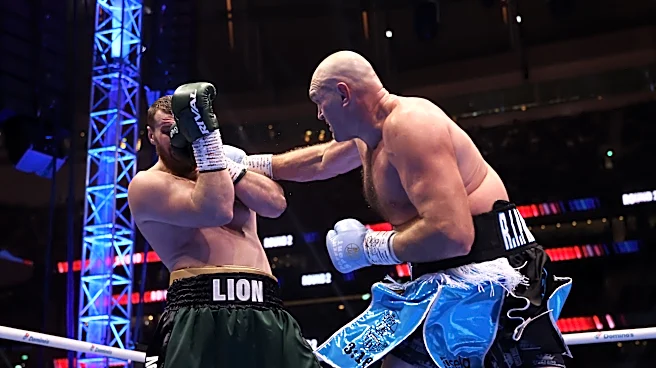
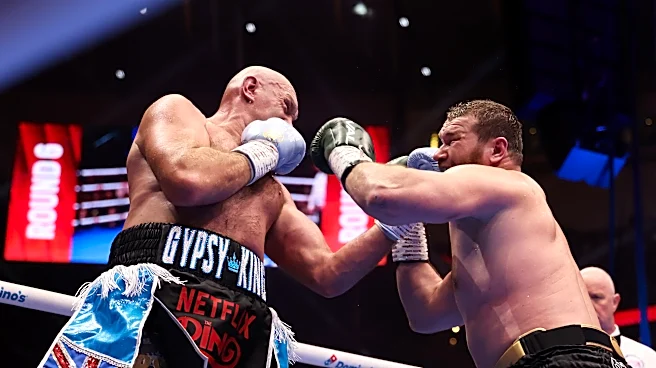
Tyson Fury made an underwhelming return to the boxing ring against Arslanbek Makhmudov, marking his comeback after a fifth retirement. The fight, held at Tottenham Hotspur Stadium, was characterized by Fury's struggle to dominate, despite winning on points.
Makhmudov's flaws overshadowed Fury's own, as the former world heavyweight champion appeared off pace and less inventive than in previous bouts. The match was intended to set up a long-anticipated fight with Anthony Joshua, who was present at the event. Fury's performance, however, raised concerns about his current form and ability to deliver a decisive victory.
Why It's Important?
The significance of Fury's return lies in its implications for a potential fight with Anthony Joshua, a matchup that has been eagerly anticipated by boxing fans. Fury's lackluster performance against Makhmudov suggests a narrowing gap between him and Joshua, who has faced his own challenges recently. This potential parity could make a Fury-Joshua fight more competitive and appealing. The urgency to arrange this fight is heightened by both fighters' advancing ages and recent struggles, which could diminish their marketability and performance if delayed further.
What's Next?
The next logical step is to finalize the Fury vs. Joshua fight, capitalizing on the current interest and the fighters' comparable conditions. Both boxers have expressed interest, but logistical and promotional hurdles remain. The fight's outcome could significantly impact their careers, with the winner likely to gain a substantial boost in reputation and marketability. Stakeholders, including promoters and broadcasters, are expected to push for a swift agreement to maximize financial and fan engagement opportunities.