







What's Happening?
Mid Valley Disposal, a waste management company based in Fresno, California, has unveiled a new state-of-the-art processing line that incorporates artificial intelligence to enhance recycling operations. The company, which has been in operation for 30
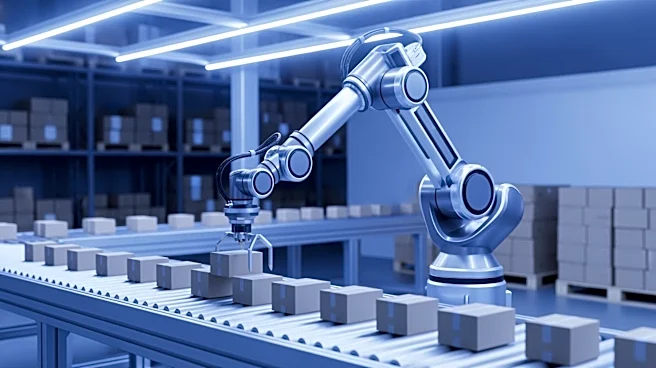
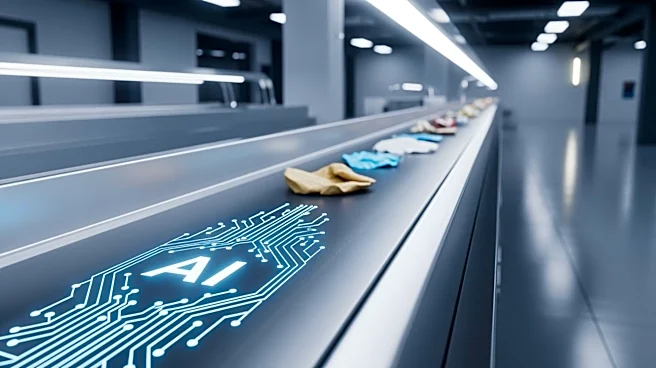
years, introduced this advanced line equipped with AI-powered robots designed to sort recyclables such as cardboard, aluminum cans, glass, and plastic bottles. This development is part of a $12 million investment, which includes a $4.5 million grant from Cal Recycle. The new technology is expected to increase the company's processing capacity from 35 to 60 tons of recyclable material per hour while reducing operating hours. The expansion will also create 20 new jobs, focusing on maintenance of the new line. Mid Valley partnered with Glacier, a California-based AI company, to develop the robots that use optical sorters to improve processing speed and reduce waste.
Why It's Important?
The introduction of AI technology in waste management by Mid Valley Disposal represents a significant advancement in the recycling industry, particularly in Central California. By increasing efficiency and reducing waste, the company is setting a precedent for sustainable practices in waste management. This move not only enhances the company's operational capabilities but also contributes to environmental conservation by minimizing landfill waste. The creation of new jobs further underscores the economic benefits of integrating technology into traditional industries. Additionally, the investment in AI technology aligns with broader efforts to promote sustainability and innovation in waste management, potentially influencing other companies to adopt similar technologies.
What's Next?
With the new AI-powered processing line in place, Mid Valley Disposal is poised to significantly enhance its recycling operations. The company will likely focus on optimizing the new system to achieve the projected increase in processing capacity. As the technology proves its effectiveness, there may be opportunities for further expansion or upgrades. Additionally, the success of this initiative could encourage other waste management companies to explore similar technological advancements. Stakeholders, including local governments and environmental groups, may monitor the outcomes closely to assess the impact on regional waste management practices and sustainability goals.